I’ve eaten across a lot of Asia, but the first time I stood on a Mumbai sidewalk holding a paper cone of bhel puri while a rickshaw honked past my elbow, I understood why Indians talk about street food the way other people talk about religion. There’s something about eating from a cart that a restaurant simply cannot replicate. The 10 street food classics on this list are the indian street foods you must try before you leave the country, and I’ve done my best to note where each one is most authentic. If you’re building a food-first trip, this is your starting point.
India is roughly the size of the European Union in both landmass and population, and its cuisine is regional in a way most travelers underestimate. What passes as a national dish in Delhi is a strange import in Chennai. That’s why the 10 indian street foods you must try below are organized around where they actually come from, so you can plan which city to hit for which dish. I promise it will change how you eat here.
How I Picked These 10 Indian Street Foods You Must Try
I ranked these on 3 criteria. First, how widely available and beloved the dish is across India, not just in one city. Second, whether the version you get on the street genuinely beats the restaurant version (this matters more than you’d think). Third, whether the dish tells you something about the region it comes from. A vada pav in Mumbai is not just a snack, it’s a 5 rupee lesson in how the city eats. Every item on this list is vegetarian or has a strong vegetarian version, since about 70% of Indian street food is meat-free by default. I’ve also flagged the drinks and desserts separately so you know when to save room. Now let’s get into the indian street foods you must try, in the order I’d rank them.
Interactive
Plan Your Indian Street Food Day
Tell me where you’re going and how you like to eat. I’ll build you a full day of the indian street foods you must try, with specific stalls to hit and what it’ll cost.
1. Which Indian city are you visiting?
2. How much can you eat in a day?
3. How’s your spice tolerance?
4. Any dietary constraints?
1. Chaat (Pani Puri, Bhel Puri, Dahi Puri)
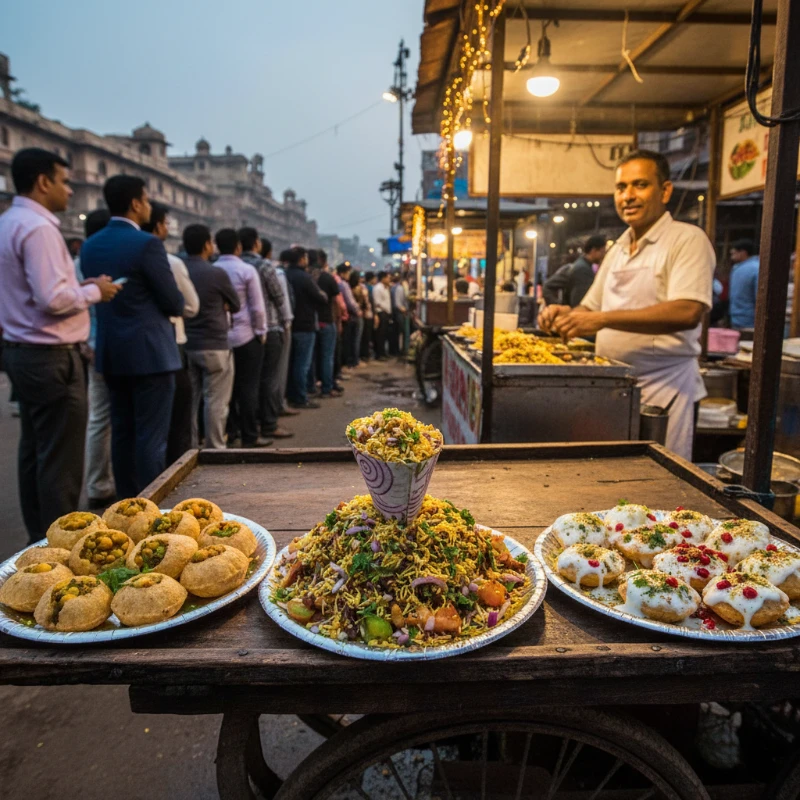
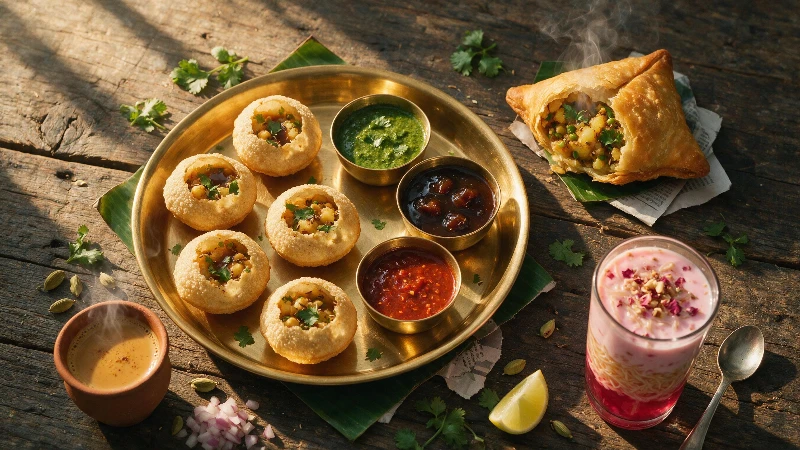
Chaat is the umbrella term, and the umbrella is huge. Pani puri (also called gol gappe or puchka depending on the city) is the entry-level thrill: a hollow crispy shell the size of a golf ball, cracked open at the top, stuffed with spiced potato and chickpeas, then flooded with a cold shot of tamarind and mint water. You eat it in one bite. If you chew, you've done it wrong. Bhel puri is the dry cousin, a puffed-rice mix tossed with chopped onions, tomatoes, cilantro, and sev, dressed with tangy chutneys. Dahi puri splits the difference: crisp shells filled with potato, drenched in cold sweet yogurt, and topped with pomegranate seeds.
Chaat is more authentic in north and central India, especially Delhi, Varanasi, Lucknow, and Indore. Look for a cart with a line of local office workers at 6pm. That's your signal.
2. Dosa
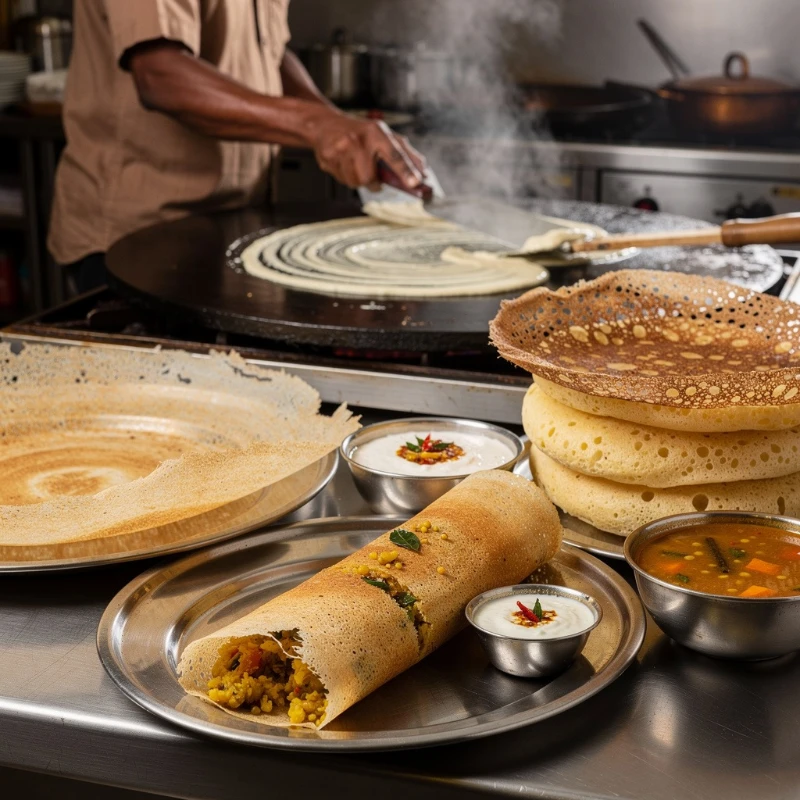
A dosa is a fermented rice and lentil crepe, cooked ultra-thin on a flat griddle until the edges lift and crackle. The most famous version is the masala dosa, filled with spiced mashed potato and served with coconut chutney and a bowl of sambar, a sour lentil stew studded with vegetables. But the format has infinite variations: paper dosa (comically long), rava dosa (semolina, lacy), Mysore masala dosa (with a red chili chutney smeared inside), set dosa (fluffy, smaller, served in stacks). At a good south Indian tiffin place, you'll see the cook working 6 dosas at once on a griddle the size of a coffee table, flipping them with a metal spatula like he's dealing cards.
Dosa is a south Indian creation, at its best in Bangalore, Chennai, Mysore, and across Karnataka and Tamil Nadu. You'll find it everywhere in India, but the further north you go the worse it gets. If you're stopping in Bangalore, this is your priority breakfast, and it ranks near the top of any honest list of indian street foods you must try.
3. Filter Coffee and Masala Chai
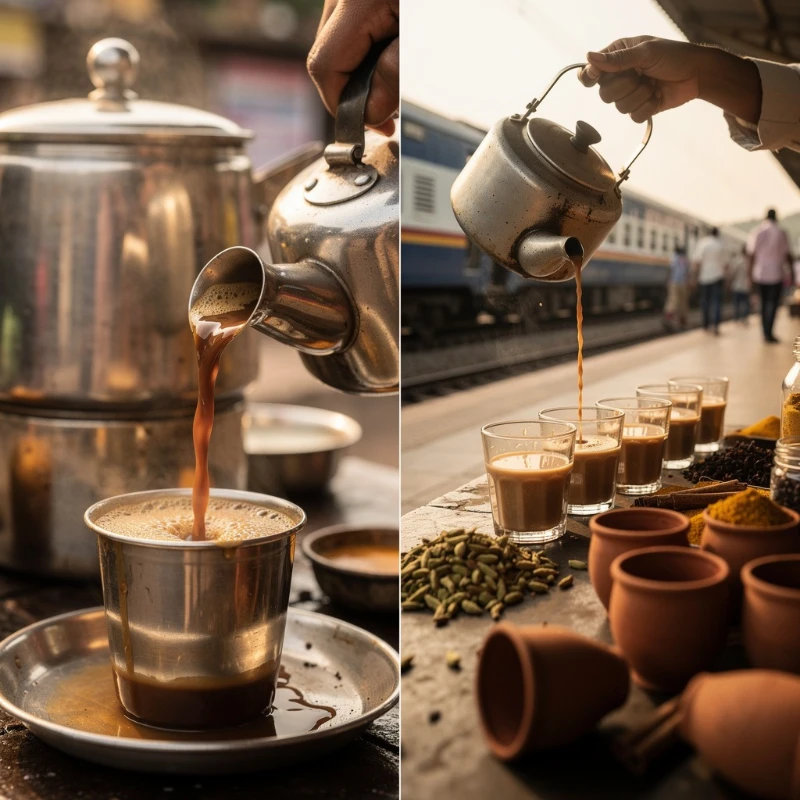
India is split cleanly into 2 hot drink cultures. In the south, especially Kerala and Tamil Nadu, it's filter coffee: dark, strong, chicory-blended coffee brewed in a small stainless steel percolator, then mixed with hot milk and sugar and served in a metal tumbler that sits inside a wider metal saucer called a davara. You pour it back and forth between the 2 to cool and froth it before drinking. The coffee itself is closer to a Vietnamese ca phe sua than an Italian espresso, thick and syrupy.
North and central India run on masala chai instead: black tea boiled with milk, sugar, ginger, cardamom, cloves, and cinnamon. A good chai wallah pours it from a height into small glass cups or clay kulhads (which you throw away after, biodegradable and beautiful). Ordering it at 4pm from a railway platform vendor is one of the small pleasures of Indian travel. If you've done a long train ride, you've had 6 of these. Together these 2 drinks are the bookends around every day of eating indian street foods you must try in India.
4. Idli, Vada, and Bonda
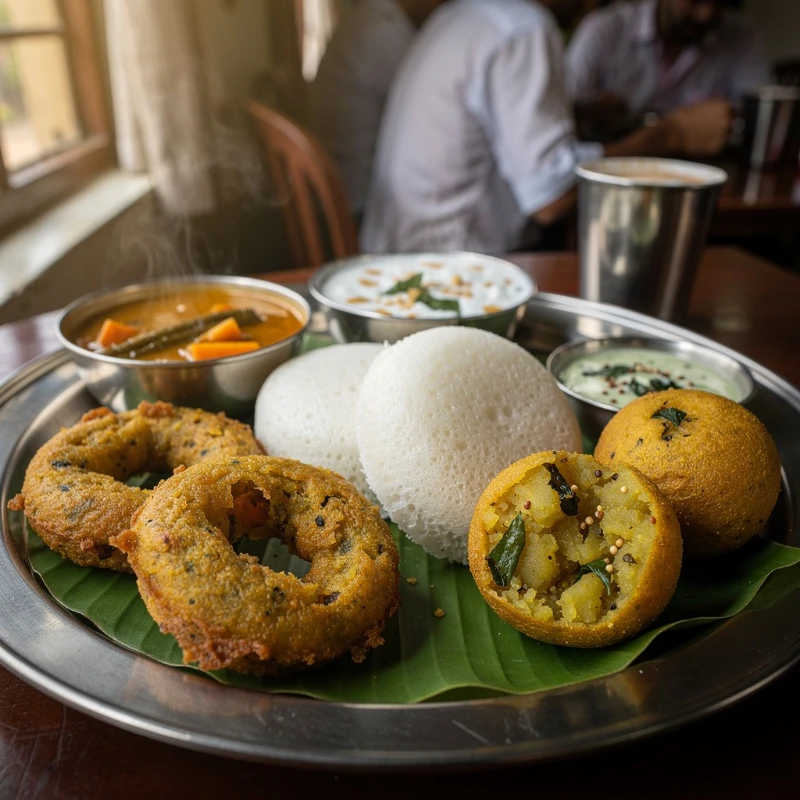
This is the south Indian tiffin trio. Idli is a soft, pillowy steamed cake made from fermented rice and lentil batter, served with sambar and chutney. It's about as gentle as a food can be, which makes it a perfect first meal of the day. Medu vada is the fried counterpart: a lentil-flour donut with a crisp shell and a fluffy interior, served the same way. And bonda is the wild card, a deep-fried ball of spiced mashed potato encased in a chickpea-flour batter, closer to a savory doughnut. Order all 3 at once and you have a complete south Indian breakfast for under 100 rupees.
Originally south Indian, but you'll now find idli-vada carts across every major Indian city thanks to internal migration. The best ones are still in Bangalore, Chennai, and Kerala, but I've had great versions in Mumbai's Matunga neighborhood, which is a Tamil enclave. If you liked the Japanese breakfast experience I wrote about in my Japanese foods you must try guide, this is the Indian equivalent: small, subtle, and profoundly good.
5. Vada Pav and Bhajiya Pav
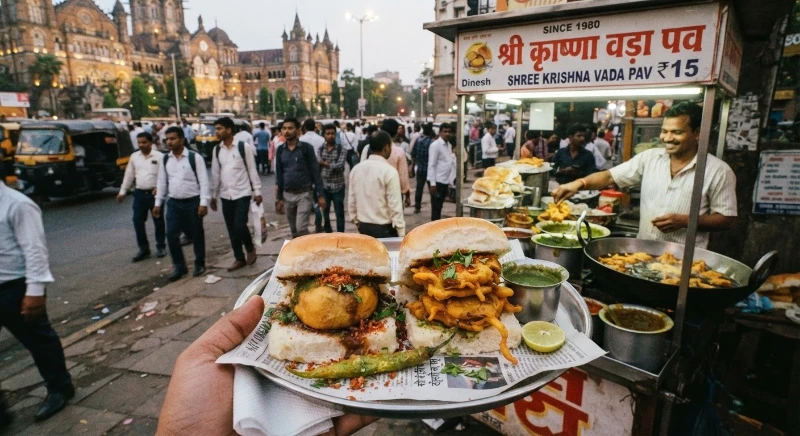
Vada pav is the reason Mumbai works. Millions of office workers, students, and rickshaw drivers eat this 15 rupee snack every single day, and once you've had one you'll understand why. The vada is a spicy mashed-potato patty coated in chickpea batter and deep-fried until crackling. The pav is a soft, slightly sweet white bread roll, sliced open, smeared with green cilantro-chili chutney on one side and sweet tamarind chutney on the other. The vada goes inside, gets a sprinkle of dry garlic chutney and a fried green chili on the side, and you eat it in 4 bites while standing on the sidewalk.
Bhajiya pav is the variation: instead of a potato patty, it's crispy onion fritters (bhajiya) stuffed into the same pav with the same chutneys. It's arguably even better. This is one of the indian street foods you must try in its home city, and no version outside Mumbai comes close. Head to Dadar, Kirti College, or the vendors outside Chhatrapati Shivaji Terminus during the evening rush.
6. Pav Bhaji
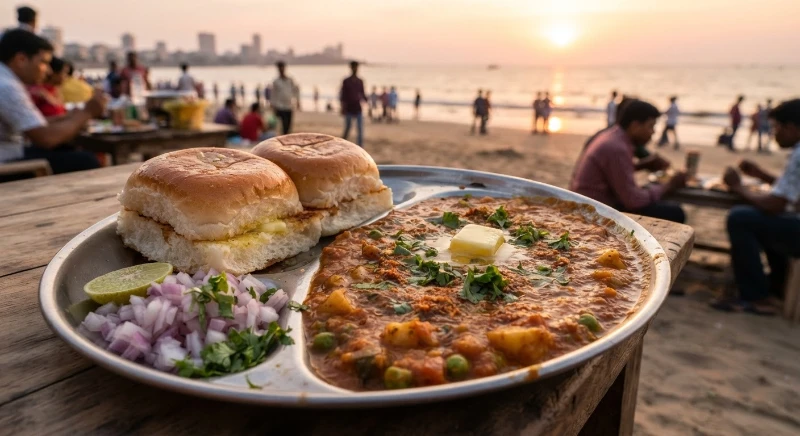
Pav bhaji is Mumbai's other gift to Indian street food. Bhaji is a rich, spiced, slightly tangy mashed vegetable curry: potato, tomato, cauliflower, peas, green pepper, all cooked down with butter and pav bhaji masala until it's a thick red-orange stew. It's served with 2 pav (the same soft rolls as in vada pav) that have been split, buttered, and toasted on the same tawa. On the side you get a small mound of finely chopped raw onion, a lemon wedge, and often another cube of butter on top just to be excessive. You tear a piece of pav, scoop, eat, repeat.
The origin story is that pav bhaji was invented in the 1850s as a quick lunch for textile mill workers on their short shift breaks. Now it's on every street corner from Juhu Beach to Chowpatty. Sardar Refreshments near Tardeo and Cannon Pav Bhaji outside CST are 2 legendary stalls. If you've only got one day in Mumbai, eat pav bhaji at sunset on Chowpatty Beach. It's one of the indian street foods you must try in its home city, and no imitation elsewhere comes close.
7. Chole Kulche and Chole Bhature
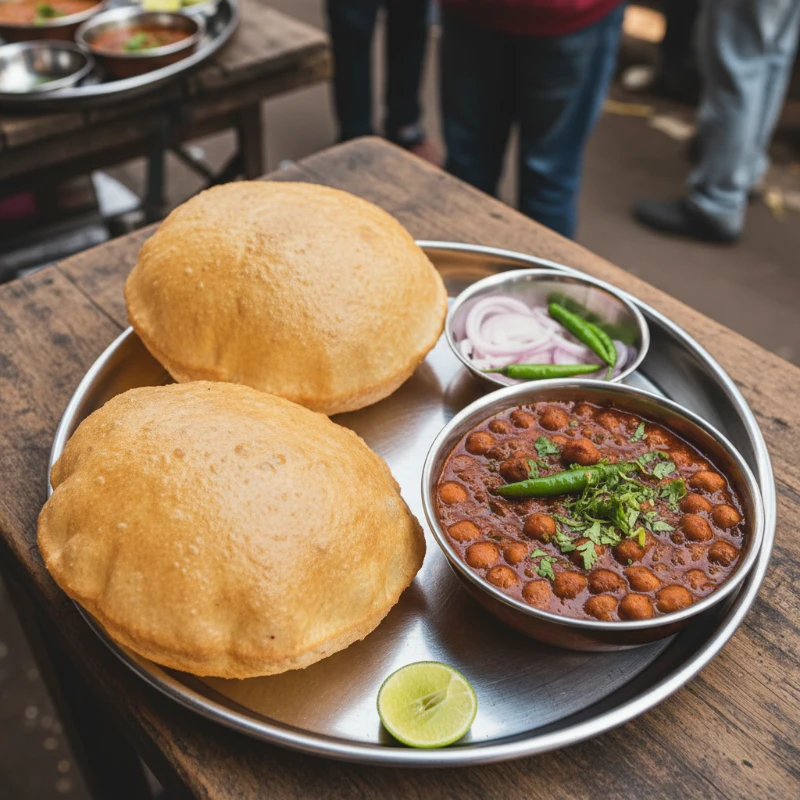
Chole is a Punjabi-Delhi chickpea curry: dark, spiced, tangy from dried mango powder, deeply savory. It gets paired with either kulche (soft, tandoor-baked flatbread with a slightly crisp bottom) or bhature (a huge puffy deep-fried bread that arrives at the table balloon-like and deflates within a minute). Chole kulche is the leaner street breakfast version, sold from carts across Delhi with sliced onions and green chilies on the side. Chole bhature is the heavyweight sit-down version, the kind of meal you eat once and skip lunch after. Both are worth trying.
This is a Delhi street food, and while you can find versions in Punjab, Chandigarh, and even Mumbai, the Delhi renditions are the reference. Head to Sita Ram Diwan Chand in Paharganj for the famous chole bhature, or the kulche carts in Chandni Chowk for the street version. If you're planning to combine Delhi with a broader Asia trip like I did after landing here from Bangkok, this is your first-morning meal.
8. Samosa
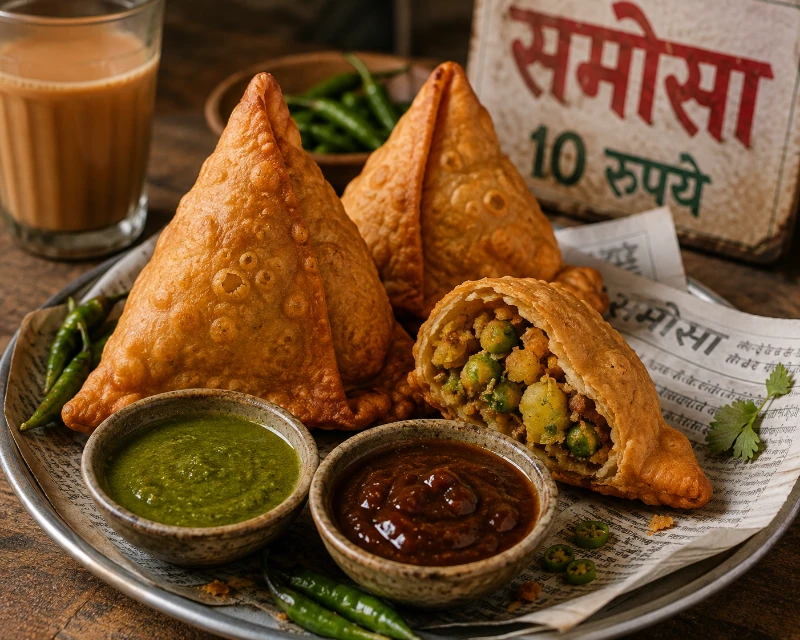
The samosa is India's most exported snack for good reason. A crisp, flaky, triangular pastry shell wrapped around a filling of spiced mashed potato, green peas, cumin, coriander, and green chili, then deep-fried to a deep golden brown. You eat it with a side of green mint chutney and sweet tamarind chutney, sometimes both drizzled on top if it's samosa chaat. The samosa is pan-Indian, sold at every train station, every bus stop, every roadside stall, and on every household tea tray at 5pm. It's the country's default snack.
Regional variations get interesting. Punjabi samosas are large and heavily potato-forward. Bengali shingaras are smaller and often stuffed with peanuts and cauliflower. Hyderabadi lukhmi samosas use meat. My rule: pick a samosa that came out of the fryer within the last 15 minutes. A stale samosa is a sad samosa. This is one of the indian street foods you must try in its regional variations across multiple cities, not just the first version you meet.
9. Falooda
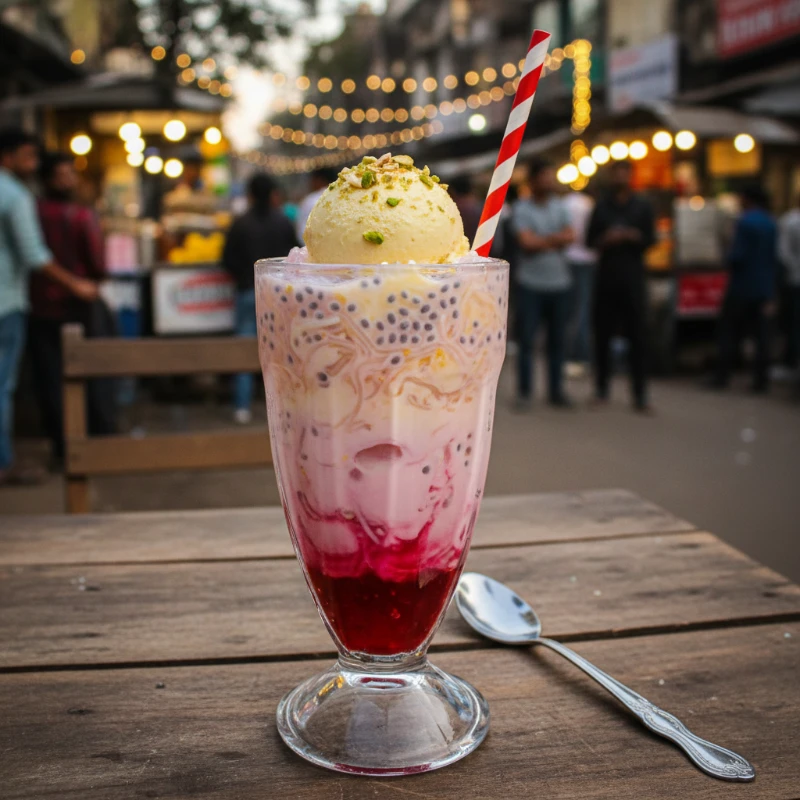
Falooda is a dessert-drink hybrid that traces back to Persian faloodeh, brought to India by Mughal traders in the 16th century. It's served in a tall glass and layered: rose syrup at the bottom, then chilled milk, then vermicelli noodles made from cornstarch or arrowroot, then basil seeds soaked until they turn into little jelly-coated pearls, then a scoop of kulfi (Indian ice cream) on top. You get a long spoon and a straw, and you're supposed to attack it from both directions at once. It sounds like too much. It is exactly the right amount of much.
The best faloodas are in Mumbai and Hyderabad. Muhammad Ali Road in Mumbai during Ramadan is peak falooda season, when the street becomes an open-air food festival. In Hyderabad, try the Irani cafes in the Old City. If you liked the frozen desserts I flagged in my Korean foods you must try guide, the falooda is the Indian answer, but louder. It's the dessert entry on this list of indian street foods you must try, and no one has ever finished one and regretted the order.
10. Lassi
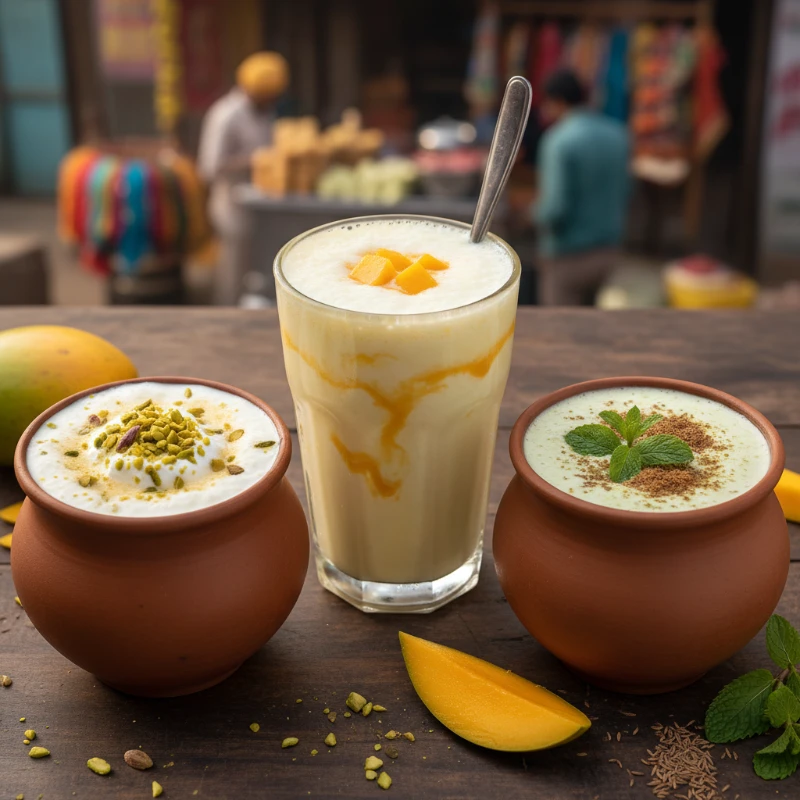
Lassi is a yogurt drink, thick enough to eat with a spoon in its richest versions, and it comes in 3 core forms. Sweet lassi is blended with sugar, sometimes topped with a spoonful of malai (clotted cream) and a scatter of chopped pistachios. Salty lassi (namkeen lassi) is blended with salt, roasted cumin, and sometimes mint, and it's what you want after a hot afternoon of sightseeing. Mango lassi, the international favorite, is a summer-only special made with fresh Alphonso mangoes in Maharashtra and Kesar mangoes in Gujarat. Order it between April and June for the real thing.
Lassi is a Punjab and north Indian classic, best in Amritsar, Delhi, Varanasi, Jaipur, and across Rajasthan. In Varanasi, the famous Blue Lassi shop by Manikarnika Ghat has been serving hand-churned lassi in clay kulhads for over 90 years. It's the closing note on any street-food day, cold, cooling, and quietly filling. Lassi rounds out this list of indian street foods you must try, and pairs well with almost everything else on it.
North vs South: Regional Breakdown of Indian Street Foods You Must Try
Here's the fast rule: south Indian street food is grain-forward, coconut-heavy, and mild-to-medium spiced. Dosa, idli, vada, bonda, filter coffee, and sambar-based sides define it. North Indian street food is bread-forward, dairy-heavy, and more assertively spiced with garam masala, chili, and dried mango powder. Chole bhature, samosa, chaat, and lassi anchor the north. Central India blends both influences, and Mumbai is its own category thanks to the pav (bread roll) tradition brought by the Portuguese in the 16th century. If your trip only covers one region, plan the dishes accordingly: Bangalore and Chennai for dosa and idli, Delhi and Amritsar for chole and lassi, Mumbai for vada pav and pav bhaji. The indian street foods you must try change dramatically depending on which airport you fly into.
Where to Eat Indian Street Food Safely
The biggest question I get is whether street food in India is safe. The honest answer: mostly yes, if you use judgment. Stick to stalls with heavy local foot traffic, since high turnover means fresh ingredients. Choose food that's cooked in front of you at high heat (samosas from the fryer, dosa off the griddle, chai boiled continuously). Avoid raw salads, chutneys sitting out in the sun, and ice from street vendors that could be made with tap water. Pani puri is the one exception worth being careful about: the tamarind water sits out and gets recycled. Ask for a fresh batch or eat at a well-known stall in a nicer neighborhood. I've eaten street food across India for years without a serious problem, and I'm not particularly cautious. Common sense, a bottle of water, and a curious appetite will carry you a long way through the indian street foods you must try.
If you're building a broader Asia food itinerary, pair this trip with a Bangkok stopover and read my Thai street foods you must try in Bangkok guide before you land there. The 2 street food scenes rank easily as the best in Asia, and they're a natural pair on a 2-week trip.
FAQ: Indian Street Foods You Must Try
India rewards travelers who eat locally, cheaply, and often. These 10 indian street foods you must try are the doorway, not the destination, and every trip through the country will add new items to your personal shortlist of indian street foods you must try on the next visit. Once you've cleared this list you'll have your own favorites and your own dhaba loyalties, and you'll roll your eyes at travelers who insist on hotel restaurants. For the rest of the food I write about across Asia, see my Japanese and Korean food guides linked above, and if you're piecing together a big trip, my 100 travel hacks guide covers the logistics.