Last updated on August 30th, 2026
Choosing between the world’s largest island and the land of fire and ice depends entirely on your personal definition of adventure. While both North Atlantic destinations boast dramatic landscapes shaped by extreme nature, they offer fundamentally different experiences for summer travelers. Iceland provides a highly accessible journey through volcanic fields and thermal wonders, whereas Greenland invites you into a raw, roadless wilderness dominated by massive ice sheets. Understanding the practical differences in infrastructure, scenery, and cultural immersion will help you select the ideal Nordic expedition for your upcoming vacation.
Planning Logistics and Ease of Movement
Navigating these two northern neighbors requires completely different approaches to transportation, scheduling, and remote trip planning. Iceland is famous for its well-maintained Ring Road, making it a dream destination for independent road trippers who prefer renting a vehicle. On the other hand, Greenland has no interconnected highways between towns, meaning all transit relies heavily on coastal ferries, helicopters, and small regional aircraft. For travelers who prefer a seamless experience without handling complex flight connections and boat schedules, booking professional trips to Iceland and Greenland guarantees that all local transit, regional flights, and remote wilderness lodging are expertly coordinated.
The peak summer season between June and August brings nearly twenty-four hours of daylight to both regions, yet the crowds you encounter will vary significantly. Iceland’s popular southern coast and Golden Circle attractions see a high volume of global tourists, which requires booking rental cars and hotels months in advance. Conversely, Greenland remains one of the least visited places on Earth, offering profound solitude and untouched Arctic landscapes even during the warmest months of the year. If you appreciate lively cultural hubs, bustling restaurants, and meeting fellow travelers along the trail, Iceland will perfectly suit your social energy.
- Self-drive accessibility: Travelers can easily circumnavigate Iceland independently using a standard passenger car or a four-wheel-drive vehicle.
- Aviation-dependent transit: Reaching remote settlements or deep fjords in Greenland requires utilizing specialized domestic air carriers.
- Tourism density differences: Popular Icelandic waterfalls often feature structured viewing platforms, while Greenlandic vistas usually lack any modern tourism infrastructure.
- Booking timelines: Securing premium accommodations along Iceland’s main routes demands much earlier preparation than organizing an off-the-beaten-path Arctic expedition.
When evaluating your physical preparation, keep in mind that Greenland requires a higher level of self-reliance and stamina due to the rugged terrain. Most excursions there begin right from the edge of small fishing villages, leading directly into untamed tundra without marked paths. Iceland offers a more cushioned adventure, where paved walkways frequently lead directly from paved parking lots straight to the most famous natural landmarks.
Distinctive Natural Wonders and Landscapes
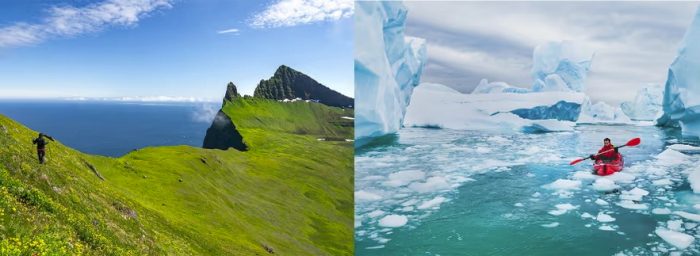
The geological forces at play in these destinations create two entirely unique visual palettes for outdoor enthusiasts. Iceland is a subterranean hotspot of volcanic activity, characterized by bubbling mud pots, shooting geysers, vast black sand beaches, and steaming geothermal rivers. Greenland is defined almost entirely by ancient ice, where the colossal ice sheet sheds massive glaciers into deep, silent fjords. Photographers and hikers must decide whether they prefer the dark, dramatic basalt formations of the south or the blinding white ice architecture of the far north.
| Feature / Experience | Iceland Travel Profile | Greenland Travel Profile |
| Primary Geology | Active volcanoes, lava fields, and geysers | Ancient bedrock, massive ice cap, and deep fjords |
| Water Features | Thousands of accessible cascading waterfalls | Massive icebergs calved directly into coastal waters |
| Thermal Activities | Abundant public hot springs and luxury lagoons | Extremely rare thermal pools, mostly cold water fjords |
| Wildlife Encounters | Nesting puffin colonies and iconic Icelandic horses | Whales in the fjords, muskoxen, and Arctic foxes |
Exploring the interior of these lands reveals further contrasts in how visitors interact with the local environment. Iceland lets you walk behind roaring waterfalls like Seljalandsfoss or hike safely atop stable, ash-covered glacial tongues. Meanwhile, sailing through Greenlandic waters means listening to the thunderous echoes of icebergs rolling over in Disko Bay. The scale of Greenland is humbling, as the sheer volume of ice creates an isolating, silent atmosphere that is increasingly rare in modern tourism.
Cultural Heritage and Local Encounters
Icelandic Saga Traditions
The cultural landscape of Iceland is deeply rooted in ninth-century Viking history, medieval literature, and a sophisticated modern arts scene. Visitors can explore ancient parliament sites like Þingvellir or spend their evenings enjoying live music and avant-garde culinary concepts in Reykjavik. The local population is highly urbanized, yet citizens maintain a profound, deeply respected connection to folklore, elves, and the historic sagas of their ancestors.
Greenlandic Inuit Communities
Greenland offers an immersive look into a living Arctic culture that has thrived in extreme conditions for thousands of years. The population is predominantly Inuit, and daily life still revolves around traditional seafaring, small-scale hunting, and dog sledding culture. Visiting colorful coastal towns like Ilulissat allows travelers to learn about specialized maritime hunting techniques, view authentic kayak craftsmanship, and experience genuine Arctic hospitality.
Making Your Final Destination Choice
Your ultimate decision should align with your personal travel style, budget comfort, and the specific type of scenery that moves you. Iceland functions as a perfect introduction to the Nordic subarctic, offering familiar comforts alongside world-class natural attractions. For those who have already seen the world’s major sights and crave something truly untamed, exploring premium https://nordicsaga.com/greenland-tours/ will satisfy that deep desire for genuine expedition travel.
Ultimately, neither destination is objectively superior, as they simply cater to different types of wanderlust. Iceland rewards the curious explorer who loves packed itineraries, diverse volcanic sights, and relaxing in thermal water after a long day of driving. Greenland rewards the patient, mindful traveler who values silence, Indigenous cultural exchanges, and seeing landscapes that very few humans have ever laid eyes upon.
FAQ
Which destination is more budget-friendly for typical American travelers?
Iceland is generally more cost-effective because the abundance of flights and car rental options creates healthy market competition. Greenland relies entirely on expensive regional flights and maritime transfers, making the baseline cost of food, lodging, and transit significantly higher.
Can I see the Northern Lights in either country during the summer months?
No, the Northern Lights are not visible in July or August due to the midnight sun phenomenon. Both countries experience near-constant daylight during mid-summer, which completely masks the solar activity in the upper atmosphere.
Do I need a tour guide to explore Greenland safely?
Yes, hiring a professional guide is highly recommended for any excursions outside the primary settlement borders in Greenland. The wilderness is entirely wild without cell service, trail markers, or emergency services, making independent navigation potentially hazardous.
What kind of clothing is mandatory for a summer trip to these regions?
You must pack high-quality windproof and waterproof layers, sturdy broken-in hiking boots, and thermal base layers. Even in the height of summer, temperatures near the ice caps or coastal fjords can rapidly drop close to freezing.
Is English widely spoken by the locals in both nations?
Yes, English is spoken fluently by virtually everyone working in Iceland’s widespread tourism and hospitality sectors. In Greenland, Danish and Greenlandic are the official languages, but tourism professionals and younger residents in town speak English well.