Last updated on August 23rd, 2026
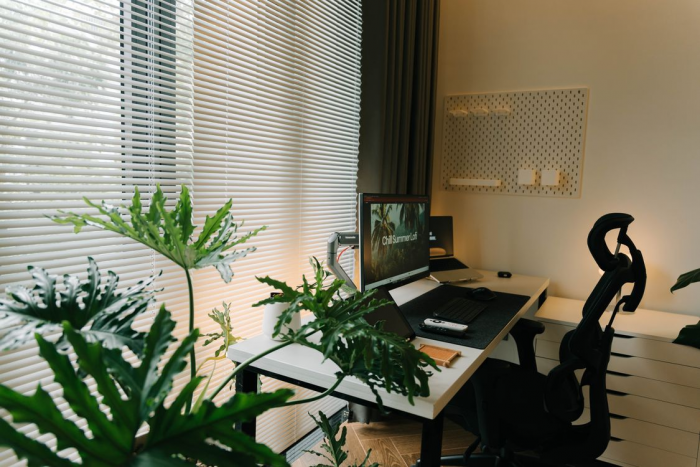
Image source: https://www.pexels.com/photo/modern-home-office-with-green-plant-decor-28461033/
A long-term remote role requires more than a basic desk and WiFi. Daily comfort, steady focus, and consistent performance depend on how well your home environment supports you.
Creating the perfect long-term remote work setup at home starts with practical upgrades that make your space reliable year-round.
Design a Dedicated, Ergonomic Workspace
Begin with a space that signals “work mode” the second you sit down. Even a small corner can feel professional with the right desk height, supportive chair, and proper monitor placement.
Poor ergonomics increases the risk of musculoskeletal disorders for people who work at computers for long hours. Back pain and wrist strain creep up slowly, which means your setup matters more than you think.
Keep these basics in mind:
- The monitor should be at eye level
- Ensure you have feet flat on the floor
- Your wrists should be straight while typing
Small posture fixes protect your focus and your health over the long haul.
Upgrade Your Home Climate Control for All-Day Comfort
Temperature affects productivity more than most people realize. A room that feels slightly too hot or too cold pulls your attention away from deep work.
The U.S. Department of Energy explains that energy-efficient air-conditioning systems help maintain consistent indoor temperatures while lowering operating costs. Stable temperatures mean fewer distractions and fewer arguments over the thermostat.
This challenge becomes even more noticeable when you regularly use multiple rooms throughout the day. For example, your home office may need cooling during work hours while bedrooms and living areas require different temperature settings. In homes where extending ductwork is expensive or impractical, Tri-Zone Mini Split Systems provide independent climate control for three separate spaces from a single outdoor unit, making them a practical option for homeowners who need customized heating and cooling across a home office, bedroom, and living area.
This allows homeowners to maintain comfortable working conditions in a dedicated office while efficiently heating or cooling other frequently used rooms as needed.
Improve the Lighting to Support Your Focus and Energy
Lighting shapes your mood and your productivity. Natural light boosts alertness, while harsh overhead bulbs can cause eye strain by mid-afternoon.
Thoughtfully designed home offices improve concentration and overall work performance. Better lighting reduces fatigue and makes long workdays feel shorter.
Position your desk near a window if possible, then layer in adjustable task lighting. Soft, warm light in the evening helps your brain wind down after work hours end.
Build Boundaries That Protect Your Well-Being
Remote work blends personal and professional life in ways that are not always healthy. Without clear boundaries, burnout sneaks in fast.
Remote employees benefit from structured routines and defined work hours. Clear start and stop times protect mental health and improve long-term productivity.
So, set expectations with family or roommates about quiet hours. Close your office door at the end of the day, even if it is just symbolic. Physical separation reinforces mental separation.
Supporting Success With Smart Remote Work Habits
Creating the perfect long-term remote work setup at home is about comfort, structure, and sustainability. So, support your long-term success by following each of the above tips.
Has this article been helpful? Yes? In that case, take a moment of your time to explore some of the other insightful posts on this site.