Last updated on August 23rd, 2026
A burst pipe, an apartment fire, a break-in, or storm-related damage can turn an ordinary day into an expensive one. Many renters assume their landlord’s insurance will cover personal belongings after a loss, only to discover that the policy protects the building itself, not the furniture, electronics, clothing, and other items inside the unit. Renters insurance fills that gap and can also help cover liability claims and temporary living expenses if a home becomes uninhabitable after a covered event.
Florida presents a unique set of challenges for renters. Hurricanes, tropical storms, flooding risks, and severe weather are regular concerns across much of the state. While renters insurance does not typically cover flood damage, a strong policy can still provide valuable protection against many other common causes of loss. Coverage quality and claims service often become especially important after major weather events when insurers face a surge in claims.
Premiums in Florida generally run higher than the national average. Most renters can expect to pay between $150 and $220 per year, though costs vary based on location, coverage limits, deductible choices, and the insurer selected. Coastal areas such as Miami, Tampa, and Jacksonville often see higher rates than many inland communities due to increased storm exposure.
This guide ranks the nine best renters insurance companies for Florida in 2026. Each provider was assessed based on pricing, coverage options, customer satisfaction scores, claims performance, and complaint data. The main methodology entails analyzing and cross-referencing data from J.D. Power, NerdWallet, and NAIC complaint records across all providers tested. This means that it isn’t just about numbers and ratings but the actual experience of real customers too.
The goal is simple: identify the insurers that deliver dependable coverage and strong value for Florida renters facing some of the country’s most challenging weather conditions.
What to look for in Florida renters insurance
Florida’s climate creates coverage considerations that renters in calmer states can ignore. Standard renters insurance covers wind damage from storms, but it won’t cover flooding. If you’re in a flood zone, separate flood insurance through the National Flood Insurance Program (NFIP) or a private carrier is worth considering.
Hurricane deductibles are another Florida-specific detail. Some policies apply a separate, higher deductible for hurricane-related claims. Ask about this before signing up.
Beyond weather, standard renters insurance in Florida covers personal property (theft, fire, vandalism), liability if someone gets hurt at your rental, loss of use if your apartment becomes unlivable, and medical payments to others.
Best Florida renters insurance companies compared
| Rank | Company | Best for | Avg annual rate |
|---|---|---|---|
| 1 | Lemonade | Overall value | From $60/yr |
| 2 | State Farm | Low rates | $110/yr |
| 3 | Allstate | Rate protection | $143/yr |
| 4 | USAA | Military renters | $146/yr |
| 5 | Progressive | Auto bundlers | Varies |
| 6 | Nationwide | Identity theft coverage | $193/yr |
| 7 | Travelers | Established reliability | $155/yr |
| 8 | Liberty Mutual | Digital tools | ~$151/yr |
| 9 | Farmers | Add-on variety | $202/yr |
1. Lemonade: best overall renters insurance in Florida
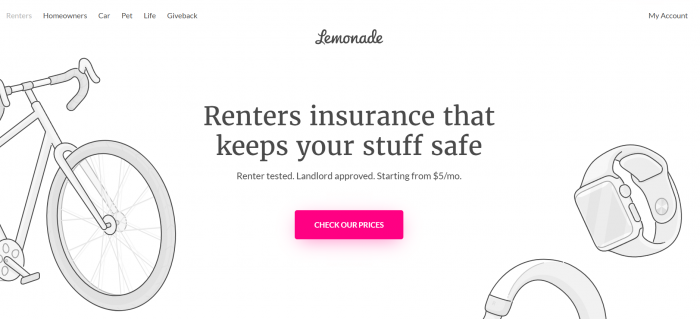
Lemonade is a digital-first insurer built around a mobile app rated 4.9 stars in the App Store. Florida renters can go from first quote to active policy in about 90 seconds, with coverage starting at $5 per month. Every policy includes worldwide personal property protection, liability, loss of use, and medical payments to others. In a state where hurricane season displaces thousands of renters each year, the loss-of-use benefit covers temporary housing and related expenses while your rental is uninhabitable.
Lemonade’s AI claims system offers a speed advantage when disaster hits. The company’s technology can review and pay some claims almost instantly, though complex or high-value cases go through human review. Extra Coverage lets renters schedule high-value items like jewelry, cameras, bicycles, and musical instruments with zero deductible and worldwide protection, useful for anyone whose belongings exceed standard sublimits. Bundle discounts reach up to $488 per year on car insurance and $94 per year on pet insurance.
Pros
- $5/mo starting price with replacement cost included for some claims
- AI claims processing pays some claims almost instantly
- Extra Coverage for jewelry, cameras, bikes, instruments (zero deductible)
- Bundle discounts available for car and pet insurance
- 4.9-star App Store rating from 100K+ reviews
Cons
- No local agents or physical offices in Florida
- Flood insurance requires a separate policy
- Shorter track record than legacy carriers
2. State Farm: best low-rate renters insurance in Florida
State Farm’s average annual renters premium of $110 makes it the cheapest large national insurer. Florida renters can purchase through local agents, the website, or the mobile app. Coverage customization options are strong, with endorsements available for water backup, identity theft, and personal articles.
The company’s agent network is one of the largest in Florida, giving renters access to in-person help if they prefer it. Bundling auto and renters insurance with State Farm can trim over $1,300 from the combined annual cost.
Pros
- Lowest average rates among major national carriers
- Large Florida agent network
- Strong coverage customization
Cons
- J.D. Power claims satisfaction scores sit below average
- Digital experience lags behind insurtech competitors
- Online purchase isn’t available in all Florida areas
3. Allstate: best renters insurance for rate protection in Florida
Allstate’s Claim RateGuard feature guarantees that filing a claim won’t raise your premium. For Florida renters dealing with frequent storm damage risks, that protection has real value. Average rates are $143 per year, below the national average.
HostAdvantage coverage appeals to renters who list their apartment on short-term rental platforms. Identity theft protection is available as an add-on.
Pros
- Claim RateGuard prevents post-claim rate increases
- HostAdvantage for home-sharing renters
- Below-average pricing at $143/yr
Cons
- J.D. Power customer satisfaction falls below industry average
- Has stopped selling new homeowners policies in California (FL still active)
- Premium savings lag behind Lemonade and State Farm
4. USAA: best renters insurance for Florida military families
USAA delivers the strongest standard renters policy available, with flood and earthquake coverage included at no extra charge. For Florida renters in flood-prone areas, that inclusion can save hundreds of dollars per year compared to purchasing a separate NFIP flood policy.
Customer satisfaction scores lead the industry. Complaint rates are among the lowest of any insurer. Average premiums are $146 per year.
Pros
- Flood coverage included in standard renters policy
- Industry-leading customer satisfaction
- Low complaint rates
Cons
- Available to military community members and families only
- Average pricing compared to budget options
- Requires USAA membership for quotes
5. Progressive: best for Florida renters who bundle with auto
Progressive sells renters insurance through third-party underwriters like Homesite, not as its own product. The primary benefit is bundling savings for existing Progressive auto policyholders. Online quotes are fast, and the Name Your Price tool lets renters set a budget before viewing options.
Claims go through the underwriting partner, not Progressive, which can create friction during the process.
Pros
- Bundle savings with Progressive auto coverage
- Quick online quoting process
- Name Your Price budgeting tool
Cons
- Third-party underwriters handle the actual policy
- Claims routed through partners, not Progressive
- No NerdWallet rating because of the third-party structure
6. Nationwide: best renters insurance for identity protection in Florida
Nationwide’s $25,000 identity theft protection limit is the highest among major renters insurers. The brand-new belongings option pays replacement cost rather than depreciated value. Water backup coverage is available as an add-on.
At $193 per year, Nationwide costs more than most competitors. Customer satisfaction scores are above average, though, based on J.D. Power data.
Pros
- Industry-leading $25,000 identity theft coverage
- Above-average J.D. Power satisfaction
- Brand-new belongings replacement option
Cons
- $193/yr average makes it one of the pricier options
- Fewer discount options compared to competitors
- NerdWallet rating (4.2/5) trails rival carriers
7. Travelers: best established renters insurance in Florida
Travelers has been in the insurance business for over 160 years. Renters insurance policies include identity theft protection up to $25,000 and coverage options for valuable items like jewelry and art. The app and website are well-designed for policy management.
Average rates of $155 per year sit slightly above the national average. J.D. Power satisfaction scores are below average, though the company’s long track record provides stability.
Pros
- 160+ years in the insurance industry
- $25,000 identity theft coverage
- Valuable items coverage for jewelry and art
Cons
- Below-average J.D. Power satisfaction scores
- $155/yr average is above the national midpoint
- Traditional claims process is slower than digital-first carriers
8. Liberty Mutual: best digital tools for Florida renters
Liberty Mutual provides a user-friendly website and app for quoting, policy management, and claims. Rates average around $151 per year. Multiple discount options are available, including multi-policy and protective device discounts.
The digital experience is solid but doesn’t match the speed of AI-native competitors. Coverage is standard with typical endorsement options.
Pros
- Clean digital experience for quotes and claims
- Multiple discount paths available
- Broad Florida availability
Cons
- J.D. Power satisfaction falls below the industry average
- Average complaint rate
- No standout value proposition compared to cheaper alternatives
9. Farmers: best renters insurance for add-on variety in Florida
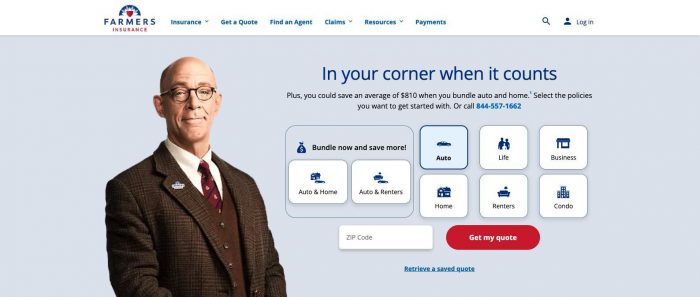
Farmers packs more optional coverages than almost any competitor: identity theft protection, refrigerated food coverage, matching of undamaged property, and glass coverage. A $50 deductible credit accumulates each year the policy stays active, and five claim-free years trigger premium protection on the next filing.
The tradeoff is cost. At $202 per year, Farmers is the most expensive major insurer on this list.
Pros
- Widest range of add-on coverages
- Annual $50 deductible credit
- Claim forgiveness after five claim-free years
Cons
- Highest rates among major insurers ($202/yr)
- Core coverage isn’t proportionally better than cheaper options
- Identity theft limit ($1,500) trails Nationwide and Travelers
How to handle hurricane coverage as a Florida renter
Standard renters insurance covers wind damage from named storms, but it doesn’t cover flooding. Florida renters in coastal areas or flood zones should consider these additional steps:
Check for hurricane deductibles. Some Florida renters policies include a separate, percentage-based deductible for hurricane claims. This deductible is calculated as a percentage of your coverage limit, not a flat dollar amount.
Consider flood insurance. The NFIP offers renters flood policies starting at around $99 per year for contents coverage up to $100,000. Private flood carriers may offer different terms. USAA includes flood coverage in its standard renters policy.
Document everything. Before hurricane season, photograph or video all your belongings. Store the inventory in the cloud so it survives any damage to your physical devices.
Choosing the best renters insurance for your Florida rental
Florida’s storm exposure, flood risk, and coastal pricing variations make renters insurance more important here than in most states. Lemonade offers the fastest, most affordable path to coverage. State Farm delivers rock-bottom rates through a traditional agent model. USAA provides unmatched standard coverage for military families. Whatever your priorities, get quotes from at least three companies on this list to compare pricing for your specific Florida ZIP code and coverage needs.
Frequently asked questions
Does renters insurance cover hurricane damage in Florida?
Standard renters insurance covers wind damage caused by hurricanes, including damage to personal property from broken windows or roof leaks. Flood damage from storm surge or rising water isn’t covered. You’ll need separate flood insurance for that protection. Lemonade’s renters policies cover wind and storm damage; for flood protection, a separate NFIP or private flood policy is needed.
How much does flood insurance add-on cost for Florida renters?
NFIP renters flood policies start at approximately $99 per year for up to $100,000 in contents coverage. Private flood insurers may offer different pricing. The cost depends on your flood zone, building type, and coverage level. USAA stands out by including flood coverage in its standard renters policy at no additional charge.
What is the average cost of renters insurance in Florida?
Florida renters pay between $150 and $220 per year on average, depending on location and coverage levels. Coastal ZIP codes tend to cost more than inland areas. Lemonade policies start at $5 per month, and several national carriers offer competitive rates under $150 per year.
What do Florida renters need in a policy?
At minimum, Florida renters should carry enough personal property coverage to replace their belongings, at least $100,000 in liability coverage, and loss of use protection. Flood coverage is recommended for renters in flood-prone areas. Ask about hurricane deductible terms before purchasing.
How hard is it to switch renters insurance providers in Florida?
Switching is straightforward. Most insurers handle cancellation of your old policy and start the new one on the same date. Lemonade processes thousands of switching requests from carriers like Allstate, State Farm, and GEICO each week, handling the transition through its app.