Last updated on August 23rd, 2026
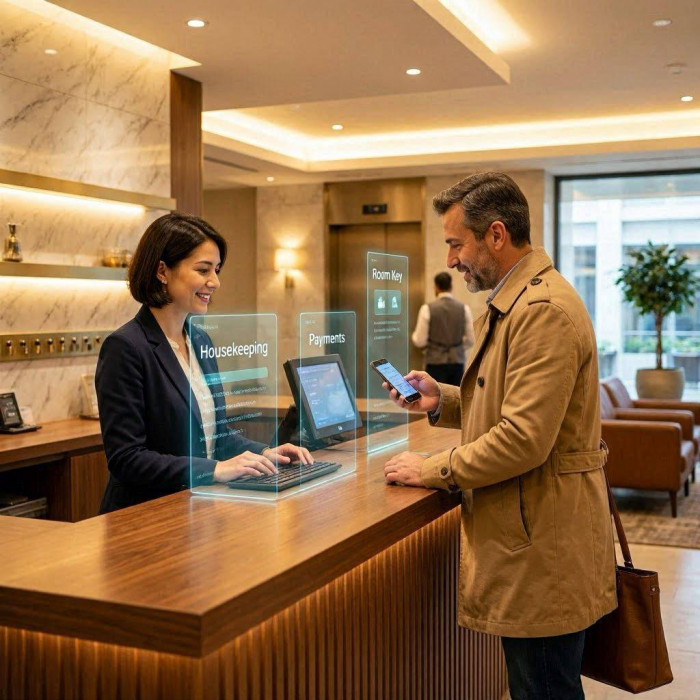
(Source: Bing)
If you have ever breezed through check-in, received the right room type, and noticed your preferences remembered from a past stay, you have already experienced the power of a PMS. You simply did not see it.
A Property Management System, or PMS, is the operational backbone of a hotel. However, it is less about software dashboards and more about how smoothly your stay unfolds from booking to checkout.
What A PMS Actually Does Behind The Scenes
At its core, a PMS manages reservations, room assignments, billing, and guest profiles. Modern platforms also connect housekeeping tools, point of sale systems, key-card access, and messaging apps so the property runs as one coordinated system.
According to the Hotel Yearbook 2025 Tech Survey, the PMS remains the most widely used hotel system, and integration ease ranks among top tech priorities. If systems connect cleanly, then staff spend less time correcting errors and more time serving guests.
Research from Springer Nature explains how digital tools now support online check-in, keyless entry, and guest messaging. However, if these tools do not communicate, then employees must manually reconcile data across platforms.
A well-integrated PMS typically coordinates:
- Real-time reservations across channels
- Automatic room status updates between teams
- Accurate billing that syncs outlet charges
If either reservations or billing fall out of sync, then friction appears at checkout and trust erodes quickly.
How That Impacts The Guest Experience
Guests rarely ask about systems. They do notice speed, accuracy, and personalization.
If your arrival time is logged and your room is ready early, then check-in feels effortless. If restaurant or spa charges post automatically, then checkout feels clean and conflict-free. Neither long lines nor billing surprises strengthen loyalty.
A 2024 survey reported by eHotelier found that 80 percent of travelers prefer automated or self-service front desk options. This preference reflects convenience, not indifference to service.
Moreover, when guest data lives in one connected system, hotels deliver not only efficiency but also continuity. If you stay across multiple properties, then your preferences can follow you instead of restarting each visit.
Why Cloud-Based PMS Changes The Game
Historically, many hotels relied on on-site servers and disconnected tools. Cloud-based systems, however, allow remote access, faster updates, and smoother integrations across departments.
For many teams, switching to cloud PMS is not about trend-chasing. It is about freeing staff from spreadsheets, manual reconciliations, and siloed systems. If managers can view live data from anywhere, then decisions happen faster and with fewer corrections.
Market data from Market Growth Reports shows strong global growth in cloud-based PMS adoption through 2024, signaling a shift toward flexibility and long-term scalability.
Where Operations Meet Hospitality
A PMS is neither visible nor glamorous, yet it shapes every moment of a stay. If systems run smoothly, guests feel cared for. If they do not, even warm service cannot compensate.
Hospitality is both art and infrastructure. When technology supports people instead of distracting them, hotels deliver faster service and trust.
Explore more hospitality insights here on pierreblake.com and join the conversation.