A step-through e-bike is practical for travel because it is easier to mount, more convenient during frequent stops, and simpler to use when carrying bags or wearing everyday clothes.
That may sound like a minor design difference, but travel rarely involves one uninterrupted ride. You stop to check directions, take a photograph, enter a café, visit a market, or walk through a crowded area. A lower frame makes each of those moments easier.
For commuters, long-term travelers, and anyone exploring a city at a relaxed pace, convenience can matter more than aggressive styling or extreme off-road performance.
What Is a Step-Through E-Bike?
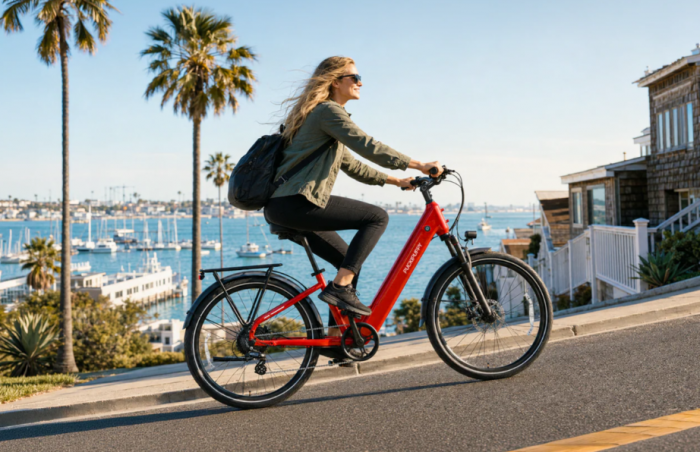
A step-through e-bike has a low or open frame that allows the rider to step through the bicycle instead of lifting one leg over a high top tube.
The motor, battery, gears, and brakes work like those on other electric bicycles. The main difference is how the rider gets on and off.
Step-through designs are sometimes associated only with older riders or people with limited mobility. In reality, they can suit anyone who values easier access, including commuters, travelers, delivery riders, and people who carry cargo.
The design is especially useful when a rear rack is loaded. Instead of swinging a leg over the luggage, the rider can approach from the side and step directly into position.
Why Do Step-Through E-Bikes Work Well for Travel?
Step-through e-bikes fit naturally into trips made up of several short journeys.
Imagine staying in a city for a few weeks. You might ride from an apartment to a coworking space, stop for lunch, visit a neighborhood outside the tourist center, pick up groceries, and return home in the evening. You may mount and dismount the bike many times in one day.
A low frame makes that routine feel less awkward. It is also more convenient when riding in ordinary travel clothes rather than specialist cycling gear.
For travelers, the design works particularly well for:
- City sightseeing;
- Trips between hotels, cafés, and attractions;
- Daily commuting during a longer stay;
- Grocery runs and errands;
- Park and waterfront routes;
- Relaxed weekend exploration.
However, the frame alone does not make a bike suitable for travel. Range, weight, brakes, tires, storage, and battery charging still need to match the journey.
Is a Step-Through Frame Stable Enough?
A well-designed step-through frame can provide stable and predictable handling for everyday riding.
Because the traditional top tube is lowered or removed, manufacturers reinforce other areas of the frame. This can add some weight, but it does not automatically make the bike less suitable for city streets or recreational routes.
Correct sizing remains important. Before buying, check the recommended rider-height range, saddle adjustment, handlebar reach, maximum load capacity, and complete bike weight.
The best frame should allow the rider to reach the controls comfortably and place a foot on the ground confidently when stopping. A low frame helps with access, but it cannot correct a bike that is too large or too small.
How Much Range Does a Travel E-Bike Need?
A travel e-bike should cover the rider’s normal round trip with enough battery remaining for hills, wind, detours, and unexpected stops.
Most riders do not need the largest battery available. They need a realistic margin.
If a normal day involves 20 miles of riding, a bike whose advertised maximum is only slightly above 20 miles may leave too little reserve. Real-world range can decrease with higher assistance levels, steep roads, heavy bags, low temperatures, and frequent acceleration.
A practical method is to estimate the longest regular journey and add a 20% to 30% reserve.
A removable battery is also valuable for travelers. It can be carried into an apartment, office, or approved charging area without moving the entire bicycle. When staying in a hotel or rental property, check its rules for storing and charging lithium-ion batteries.
How Much Motor Power Is Useful?
Motor power should match the route rather than simply provide the largest number on the specification sheet.
A lower-powered motor may be enough for flat streets and short journeys. More assistance becomes useful when the route includes hills, heavy bags, headwinds, or frequent stop-and-go traffic.
A 750W electric bike can provide stronger support during starts and moderate climbs. However, wattage alone does not determine ride quality. Bike weight, battery voltage, controller settings, gearing, and sensor design also influence how the power feels.
For everyday travel, smooth assistance is usually more useful than sudden acceleration.
A torque sensor responds to how firmly the rider pedals, while a cadence sensor detects whether the pedals are moving. When the two systems work together, assistance can feel more responsive during starts and more consistent while cruising.
Travelers should also check local regulations. Motor-power, throttle, and assisted-speed limits can vary between countries, states, and cities.
What Tires, Brakes, and Suspension Are Practical?
For city travel and everyday exploration, moderately wide tires usually offer the best balance between comfort and efficiency.
Narrow road tires may roll quickly but feel harsh on damaged pavement. Very wide fat tires provide more cushioning on loose surfaces but also increase weight and rolling resistance.
Tires around 2 to 2.5 inches wide are practical for paved streets, bike lanes, park paths, and occasional compact gravel. They provide more comfort than narrow racing tires without making the bicycle unnecessarily heavy for city use.
Hydraulic disc brakes are another useful feature. Electric bicycles are generally heavier than conventional bikes, especially when carrying a rider and luggage. Hydraulic brakes can provide controlled stopping with less pressure at the lever.
Front suspension can also reduce vibration from potholes, cobblestones, and rough bike lanes. Full suspension is rarely necessary for normal city travel and adds extra weight and maintenance.
How Important Are Weight and Storage?
Bike weight matters most when the motor is not helping.
A full-size e-bike may feel easy to ride but difficult to carry upstairs, lift onto a vehicle rack, or move through a hotel entrance.
Before purchasing, consider where the bike will be stored and how often it must be lifted. A full-size step-through model works best when the rider has ground-level storage, a secure bike room, or a properly rated vehicle rack.
Travelers who frequently use trains, flights, or walk-up apartments may find a lighter or folding model more practical.
Removing the battery can reduce some lifting weight, but the remaining frame, wheels, and motor may still be substantial. Always check the complete bike weight rather than assuming that an accessible frame is also a lightweight frame.
Which Step-Through E-Bike Is a Practical Choice for Everyday Travel?
For riders who want a comfortable city bike for commuting, errands, and relaxed exploration, the Puckipuppy Poodle Pro is one practical option.
Its low-step aluminum frame makes frequent mounting easier, while the adjustable stem and curved handlebar support a more relaxed riding position. This combination suits riders moving between work, shops, cafés, and neighborhood destinations.
The Poodle Pro uses a 750W rated motor with 960W peak output and a removable 48V 15Ah battery. Its manufacturer-listed range is 45 to 75 miles, while throttle speed is listed at up to 20 mph and pedal assistance can reach 28 mph. Actual mileage will depend on terrain, rider weight, weather, cargo, and assistance level.
Torque and cadence sensors work together to provide smoother assistance, while the Shimano eight-speed drivetrain allows riders to adjust their pedaling for starts, cruising, and changing gradients. The bike also includes hydraulic disc brakes, an 80mm adjustable front fork, and 27.5-by-2.4-inch tires.
These features make it suitable as an electric commuter bike for paved streets, rough urban roads, bike paths, and light gravel. It is not intended to replace a technical mountain bike.
The Poodle Pro weighs 63.1 pounds and supports a listed maximum load of 350 pounds. It is therefore better suited to riders with secure, accessible storage than to travelers who regularly need to carry a bicycle upstairs.
It makes the most sense for someone who values:
- Easier mounting during frequent stops;
- Smooth assistance in city traffic;
- Enough motor support for moderate hills;
- A removable battery for separate charging;
- Comfortable urban tires and front suspension;
- Dependable braking for everyday journeys.
How Does Pet-Friendly Travel Fit Into the Picture?
PUCKIPUPPY is a pet-friendly brand, and the idea is simple: everyday mobility should make it easier for riders to share appropriate outings with their pets, not leave them behind.
Anyone riding with a pet should use a compatible, securely attached carrier or trailer and follow its weight limits. A pet should never be carried loosely on an ordinary rear rack.
A step-through frame can be helpful because the rider does not need to swing a leg over the back of the bike, where a secured carrier, trailer connection, or other cargo may be positioned.
Pet comfort and safety should still come first. Consider temperature, traffic, route length, noise, water, and whether the animal is comfortable with the movement before planning a longer ride.
What Should Travelers Check Before Buying?
The right step-through e-bike should fit the complete travel routine, not simply look comfortable in a product photograph.
Before choosing one, check:
- The distance of a normal riding day;
- Hills and expected road surfaces;
- Bike and battery weight;
- Available storage;
- Access to secure parking;
- Charging arrangements;
- Cargo and rack compatibility;
- Local power and speed rules;
- Availability of replacement batteries, tires, and brake pads.
It is also worth considering how the bike feels with lower assistance. A motor can make daily travel easier, but the bicycle should remain controllable when starting, turning, parking, or moving it without power.
Why Does Step-Through Design Matter?
A step-through frame does not make an e-bike faster or automatically increase its range. It makes the bike easier to use.
That ease matters during frequent stops, when carrying bags, and when exploring a destination at a relaxed pace. It removes a small physical barrier every time the rider starts another journey.
Travel is often a collection of short movements between accommodation, work, food, parks, neighborhoods, and unexpected discoveries. A good step-through e-bike supports those movements without making the bicycle itself the most complicated part of the day.