Last updated on July 19th, 2026
Between 2023 and 2025, bleaching-level heat stress hit 84 percent of the world’s coral reefs, the most extensive crisis ever recorded. Half of all reefs have disappeared since the 1970s.
The hotels built around reef access know this better than anyone. For them, it is not an abstract environmental problem. It is a threat to the reason they exist. The eco-resorts with coral reef conservation programs below have made marine science the center of the guest experience, not a line in the sustainability report. Marine biologists on staff. Coral planting on your second morning. Survey data submitted to national databases. Here are eight worth booking.
Why Stay at an Eco-Resort with a Coral Reef Conservation Program?
Staying at one of these eco-resorts with coral reef conservation programs does more than offset your footprint:
🐌 Your room rate directly funds reef monitoring, coral restoration, and marine biology positions
🌺 You participate in real conservation work, planting corals and joining reef surveys that contribute to published science
🐟 Remote access protects reefs from the boat traffic, anchors, and overcrowding that damage most dive sites
🌊 You dive and snorkel reefs that are actively managed and measurably healthier than unprotected equivalents
🐢 You leave knowing the reef you swam on has a better chance of existing in 50 years because you were there
8 Eco-Resorts Where Conservation Is Built Into the Stay
1. Six Senses Laamu (Laamu Atoll, Maldives)
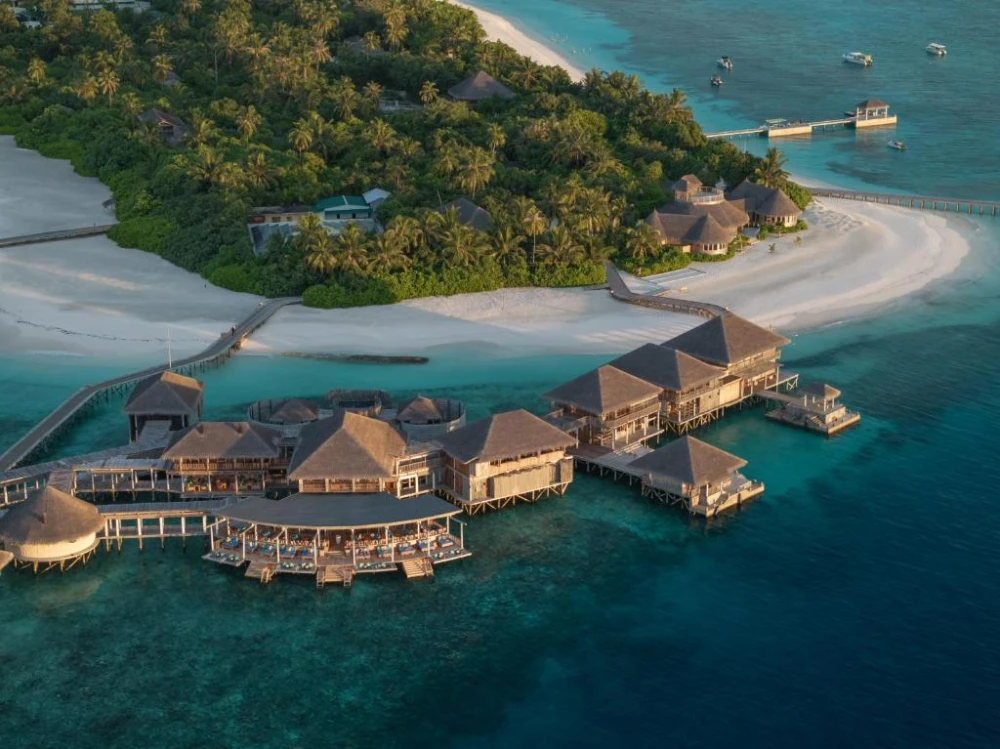
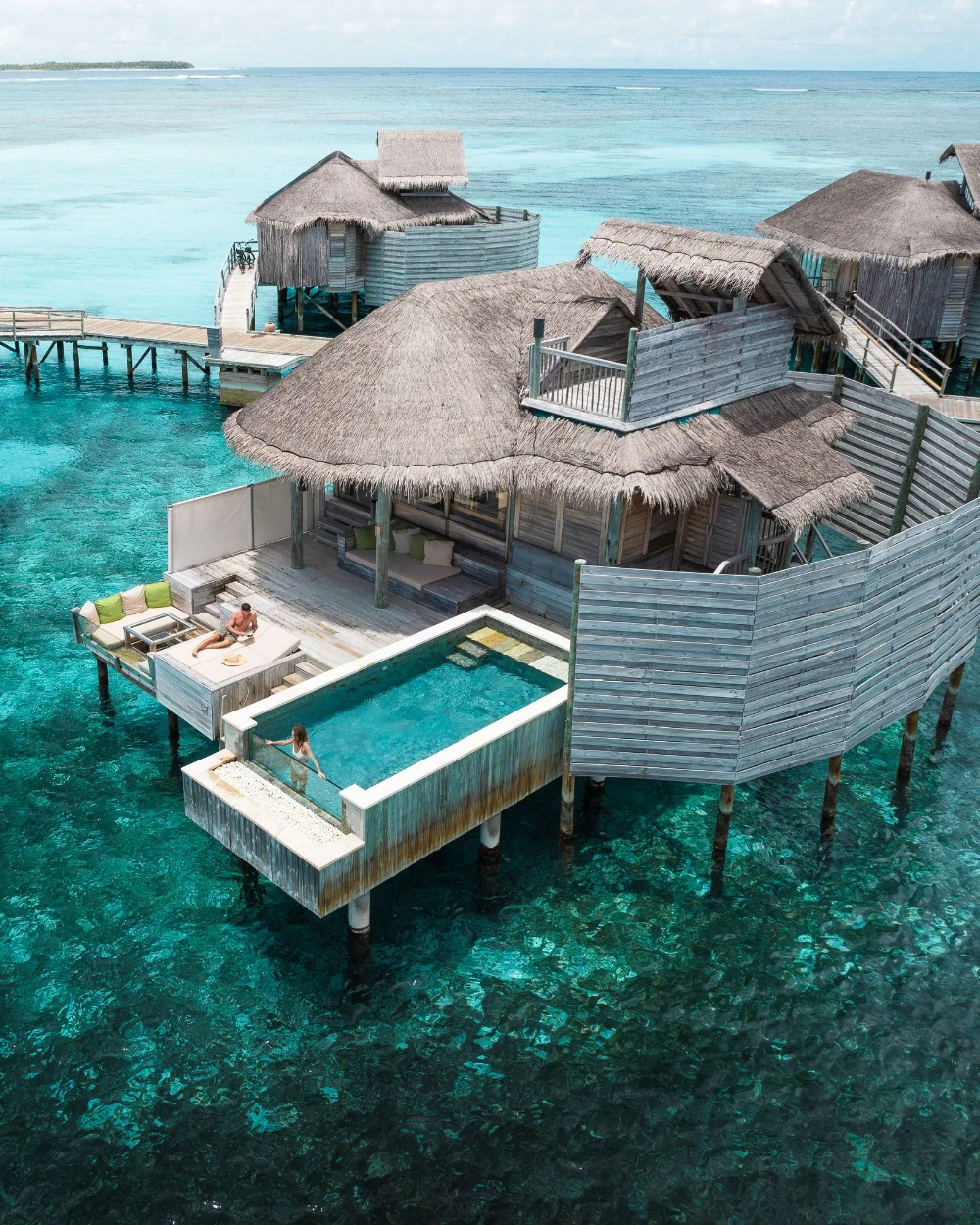
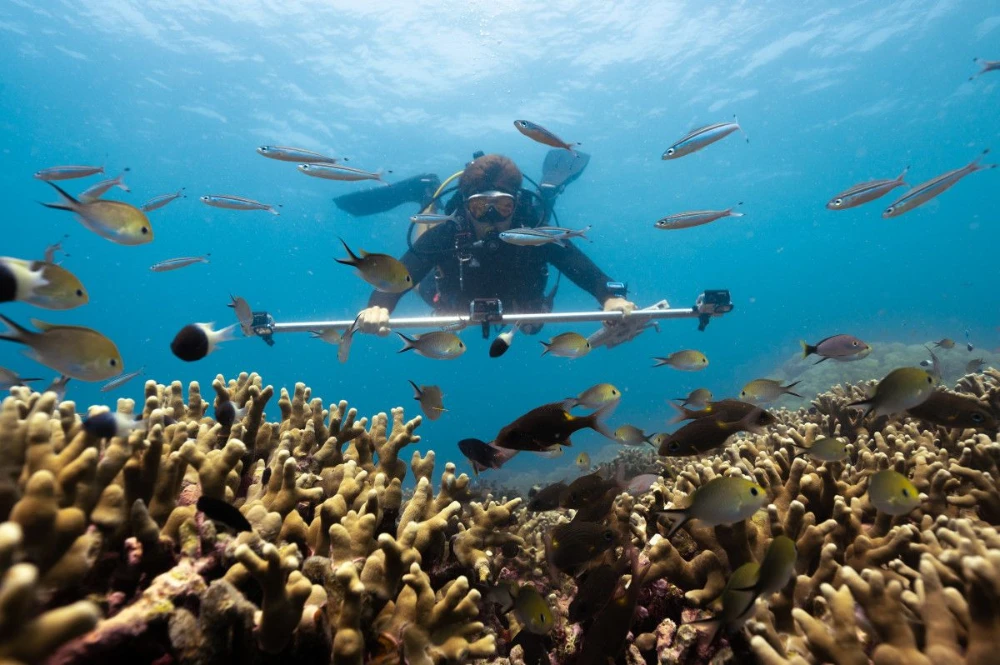
The conservation program at Six Senses Laamu is one of the most ambitious resort-based marine science operations on earth. The SHELL Sea Hub of Environmental Learning in Laamu is a purpose-built research center hosting resident NGOs and visiting scientists working on coral restoration, turtle conservation, and sustainable fisheries. Following the 2024 bleaching event, scientists released three million coral larvae grown in on-site labs onto damaged reefs. The turtle team documented 1,383 hatchlings in 2024 alone and manages one of the largest turtle identification databases in the Maldives. Guests can join reef monitoring dives, coral planting sessions, and marine science presentations. Six Senses Laamu is the only resort in the atoll, meaning the reef it is protecting has no other hotel putting pressure on it. The house reef is among the healthiest in the Maldives.
- Location: Laamu Atoll, Maldives
- Highlights: SHELL Sea Hub research center; 3 million coral larvae released post-2024 bleaching; 1,383 turtle hatchlings documented in 2024; only resort in the atoll; healthiest house reef in the Maldives
- Perfect for: Divers and snorkelers who want real science, families with a conservation interest, travelers who want the most credible eco-resort in the Maldives
2. Gili Lankanfushi (North Male Atoll, Maldives)
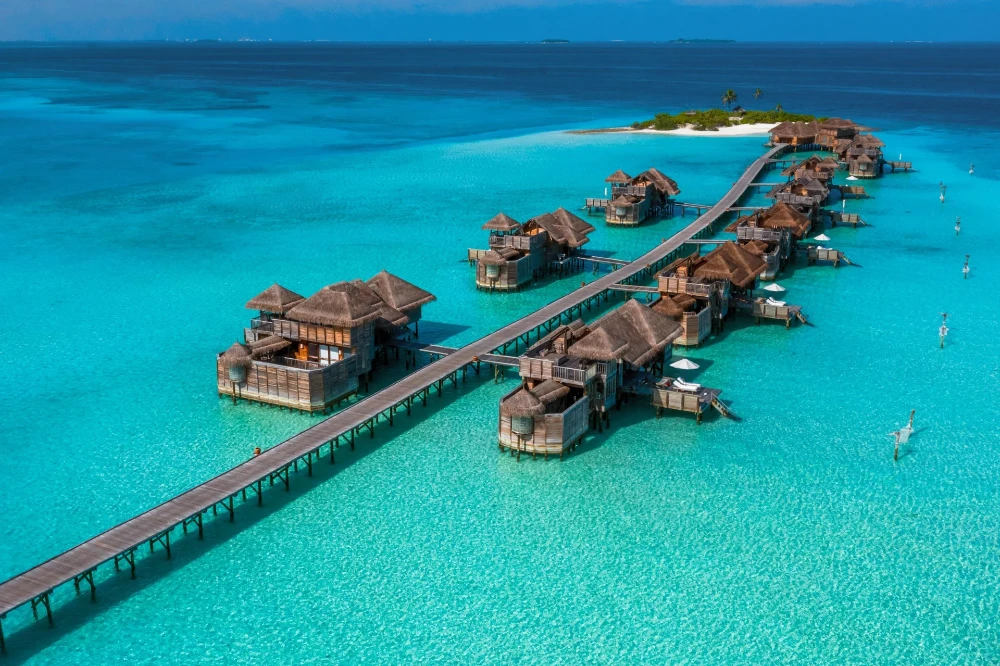
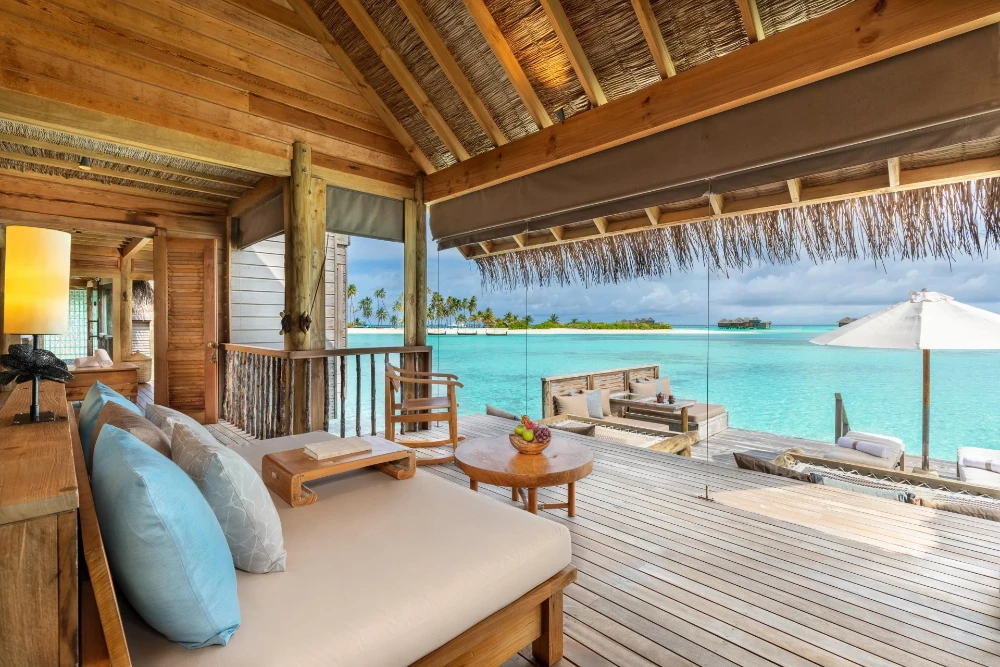
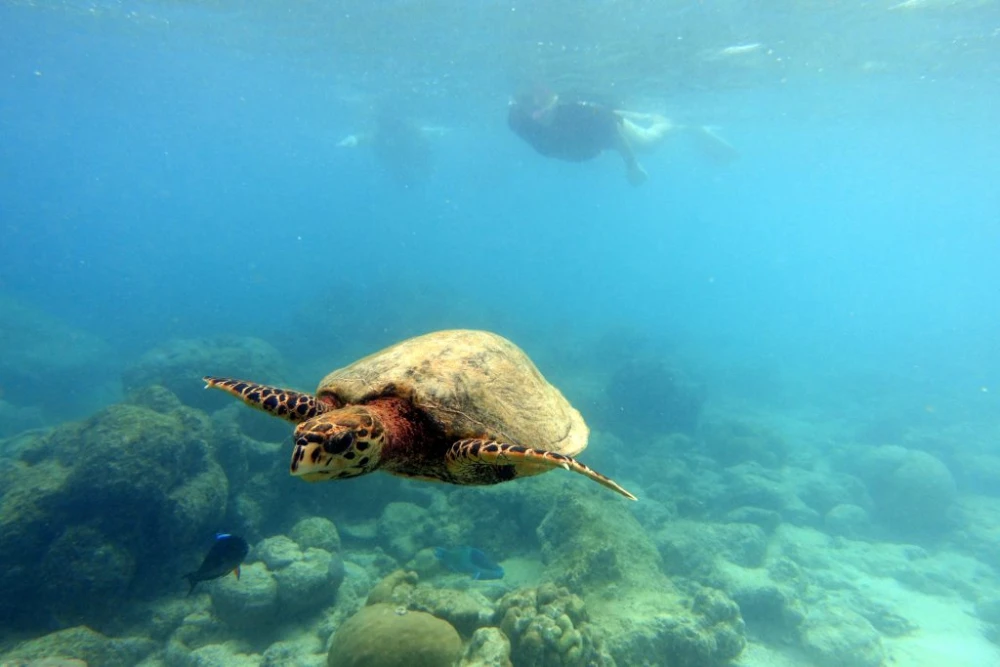
Gili Lankanfushi has employed marine biologists since 2012, long before sustainability became a hotel marketing category. The team monitors reef biodiversity, tracks manta rays and turtles, removes invasive Crown of Thorns starfish, and runs the resort’s flagship Coral Lines project: the first rope-based coral restoration program in the Maldives, where guests can adopt a coral fragment and watch it grow. In March 2025, Gili was awarded EarthCheck Gold Certification, one of only three resorts in the Maldives to hold it. The philosophy is “No News, No Shoes.” Phones down. Bare feet. A house reef that has been quietly improving for over a decade.
- Location: North Male Atoll, Maldives
- Highlights: Marine biologists on staff since 2012; Coral Lines rope-based restoration program; guest coral adoption; EarthCheck Gold Certification (one of three in the Maldives); manta ray and turtle tracking
- Perfect for: Reef conservation divers, guests who want to adopt and monitor a coral fragment, those who prioritize verified third-party sustainability credentials
3. Jean-Michel Cousteau Resort (Savusavu, Fiji)
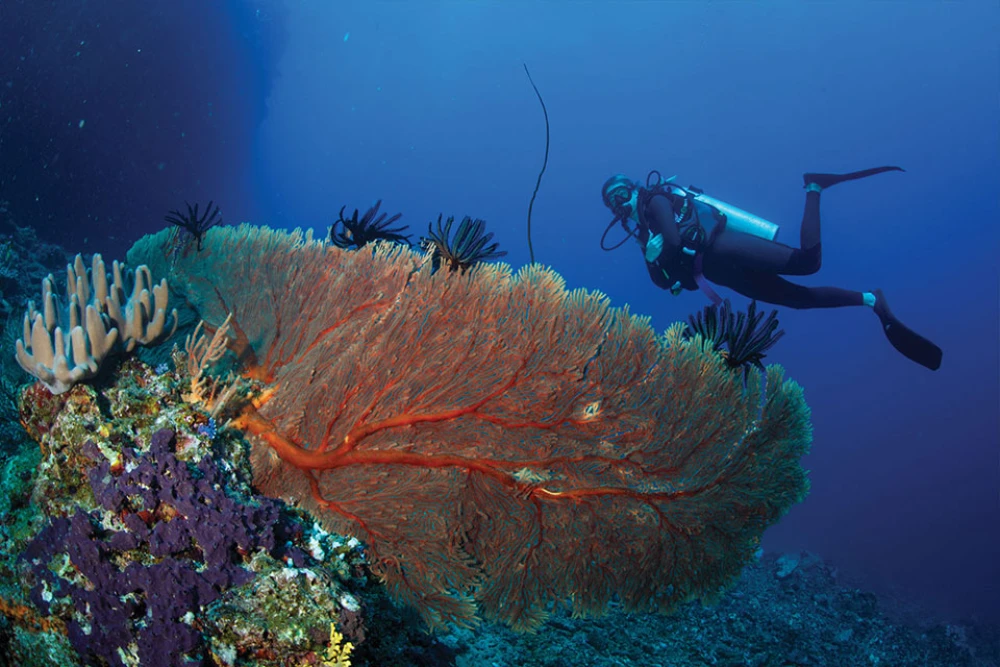
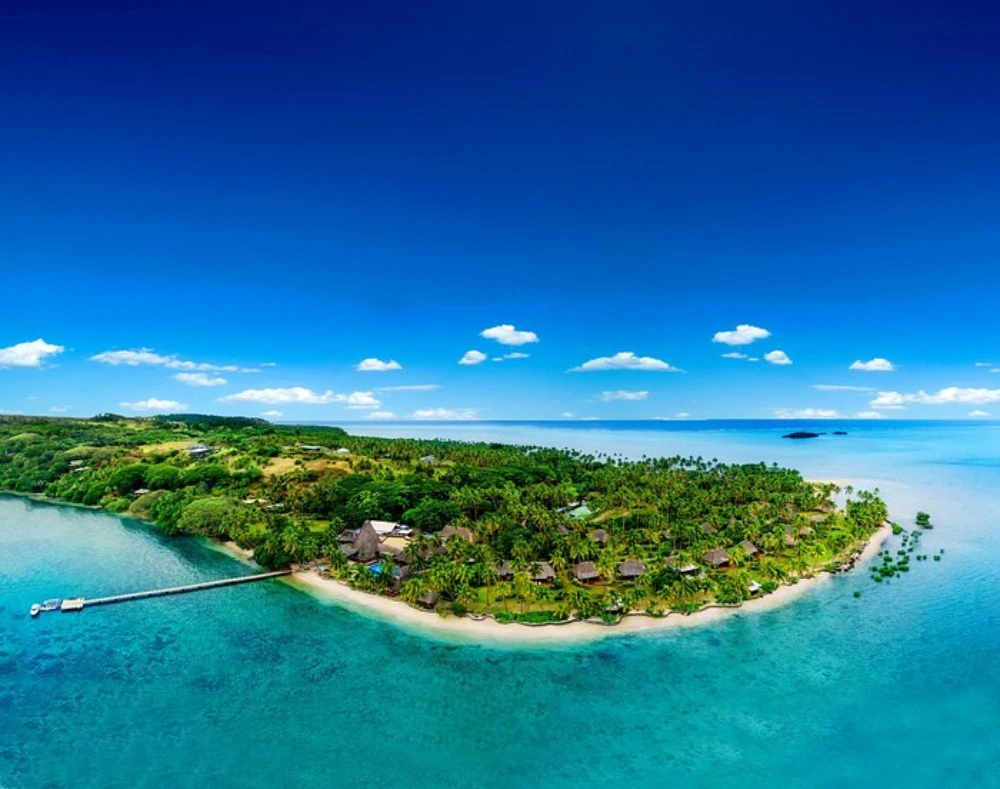
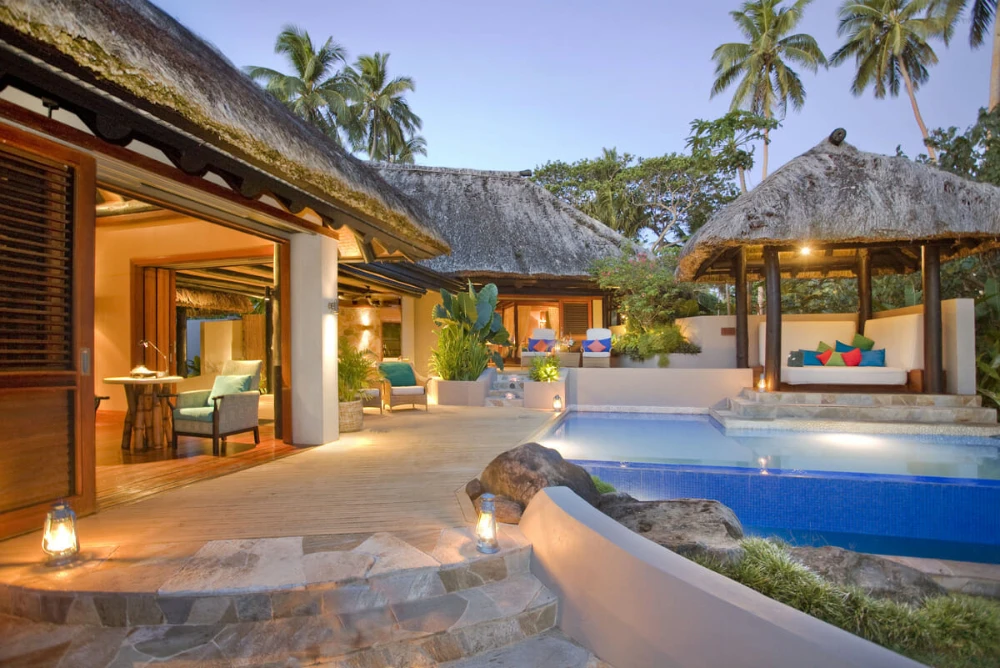
Named after the world-renowned ocean conservationist, the conservation credentials at Jean-Michel Cousteau Resort are baked in from the start. The resort has a full-time in-house marine biologist, an active reef protection program, and a giant clam-breeding project. Fiji is known as the Soft Coral Capital of the World, and the reefs here are widely considered among the best dive sites in the Pacific. Guests join marine biology presentations, reef dives, and conservation workshops led by the resident science team. For divers seeking world-class soft coral alongside genuine scientific commitment, this is one of the most complete eco-resort experiences in the Pacific.
- Location: Savusavu, Vanua Levu, Fiji
- Highlights: Full-time in-house marine biologist; giant clam-breeding project; reef protection program; Fiji’s Soft Coral Capital reefs; some of the best dive sites in the Pacific
- Perfect for: Divers and marine biology enthusiasts, families with young ocean-curious guests, travelers who want Pacific reef access with serious conservation credentials
4. Heron Island Resort (Great Barrier Reef, Australia)
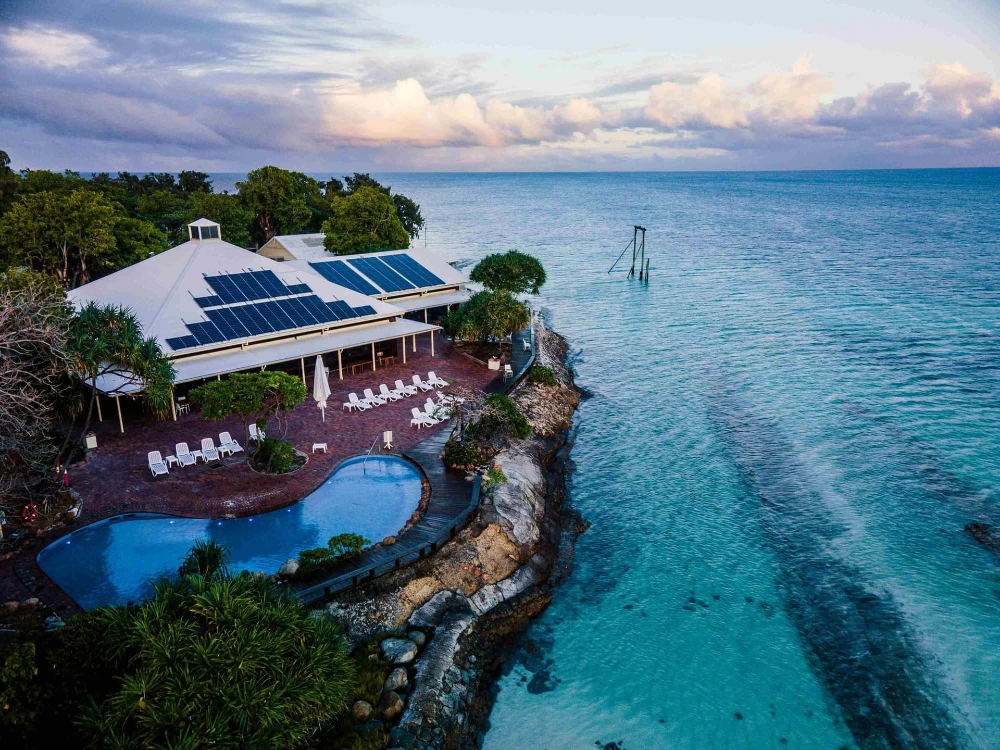
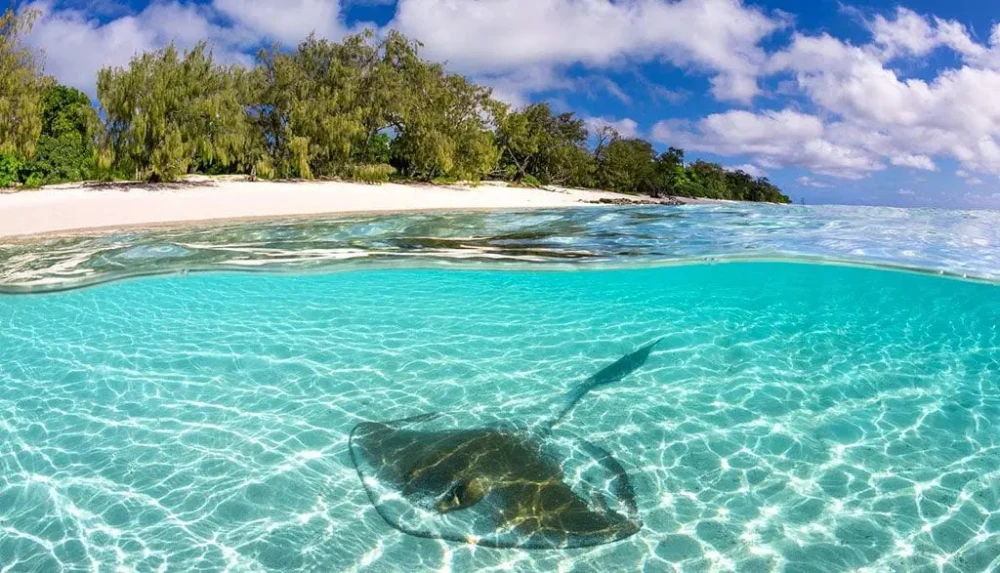
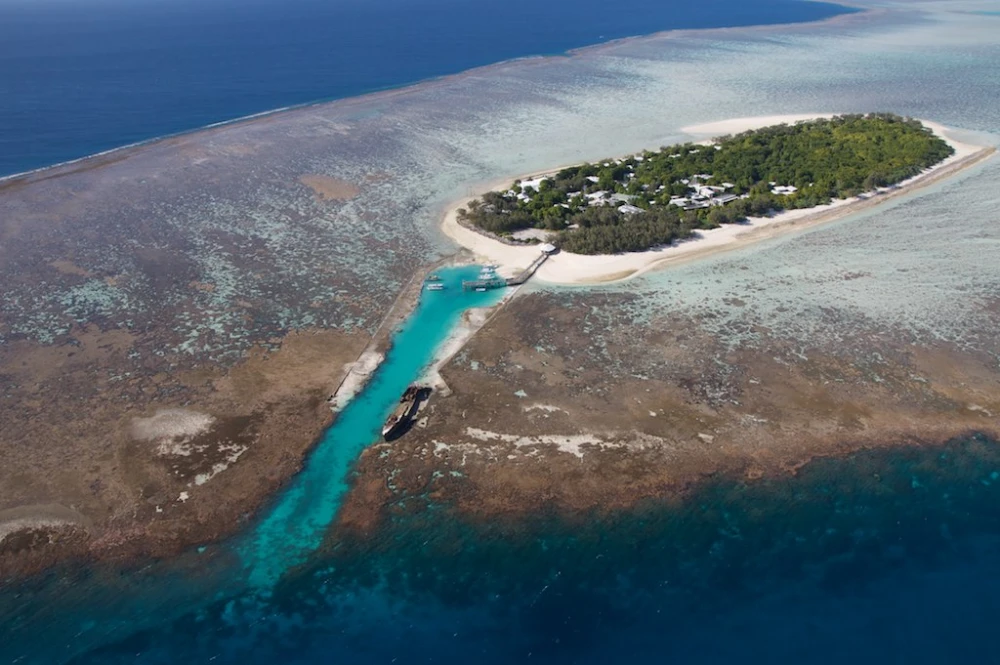
A coral cay sitting directly on the reef, reachable by helicopter or catamaran from Gladstone. The University of Queensland has operated a research station at Heron Island Resort since 1951, the longest continuous reef monitoring record in Australia, spanning over 70 years of published data. Guests snorkel from the beach directly onto the reef, join guided low-tide reef walks, and attend turtle nesting tours during the November to March season. The coral around Heron Island is some of the healthiest on the Great Barrier Reef, and the science happening here is continuously published in peer-reviewed journals. Nowhere in Australia puts you closer to serious, long-running reef science while sleeping in genuine comfort.
- Location: Coral cay on the Great Barrier Reef, Queensland, Australia (by helicopter or catamaran from Gladstone)
- Highlights: University of Queensland research station since 1951; 70-plus years of continuous reef monitoring data; direct beach-to-reef snorkeling; guided reef walks; turtle nesting tours November to March
- Perfect for: Science-oriented travelers, Great Barrier Reef bucket-list divers, families wanting nature immersion with genuine research context
5. Song Saa Private Island (Koh Rong Archipelago, Cambodia)

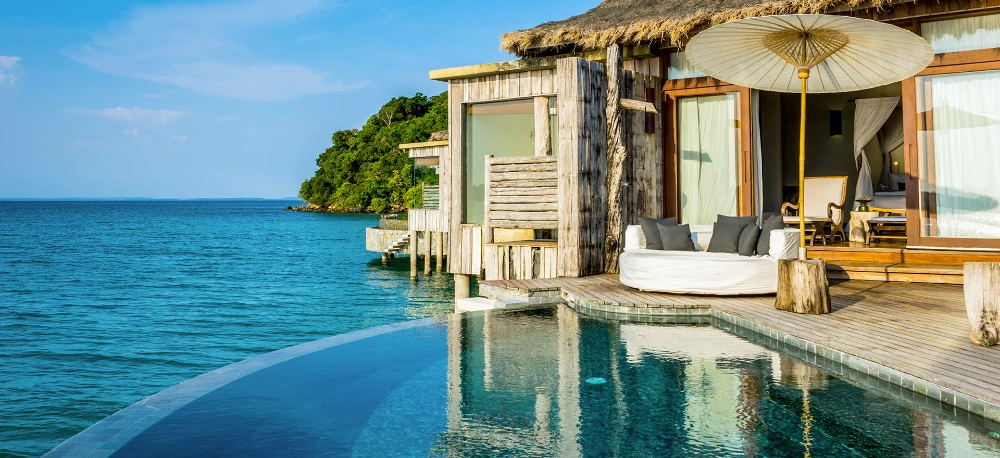
Two small islands connected by a footbridge over a marine reserve, 45 minutes by speedboat from the Cambodian coast. Song Saa Private Island was the first resort to build here, and the owners established Cambodia’s first marine protected area in the process: a million square meters of reef, now part of the Koh Rong Marine National Park proclaimed in 2018. The Song Saa Foundation has conducted over 275 coral reef research dives in the archipelago and runs active coral restoration alongside environmental education for local children. Guests can snorkel from their overwater villas directly onto the house reef, join conservation staff on guided reef tours, or trek with a marine expert through the surrounding rainforest. Villas are built with reclaimed timber and local materials. Cambodia’s coastline is still what Thailand was forty years ago. This is the best place to experience it.
- Location: Koh Rong Archipelago, Cambodia (45 minutes by speedboat)
- Highlights: Established Cambodia’s first marine protected area; 275-plus reef research dives; Koh Rong Marine National Park (2018); direct overwater villa snorkel access; reclaimed timber construction; local education program
- Perfect for: Off-the-beaten-path travelers, conservation-minded couples, those who want to be part of a reef protection story at its earliest chapter
6. Nujuma, a Ritz-Carlton Reserve (Ummahat Islands, Saudi Arabia)
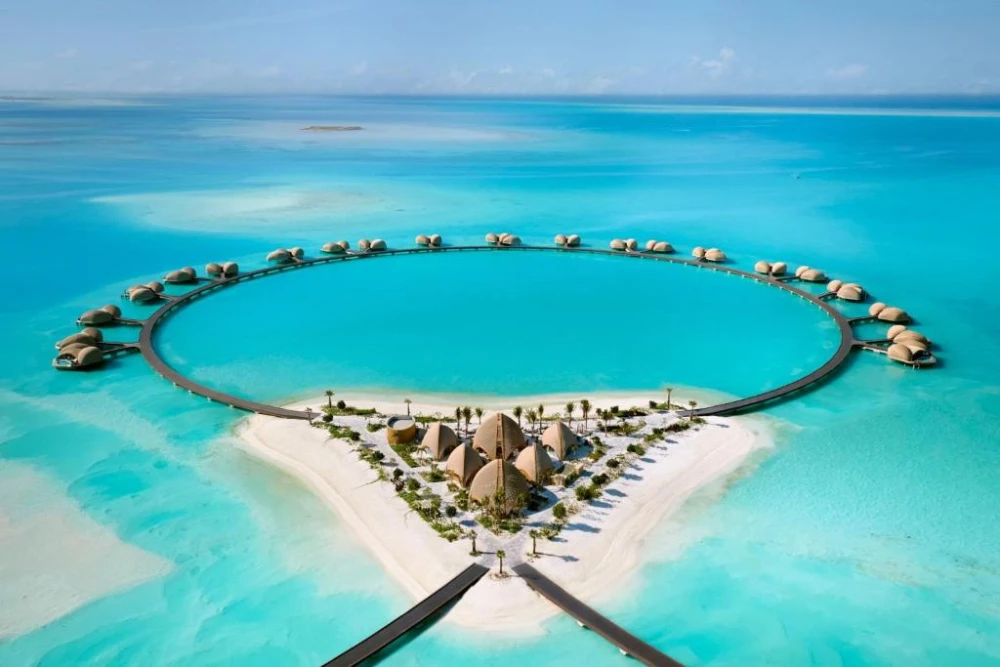
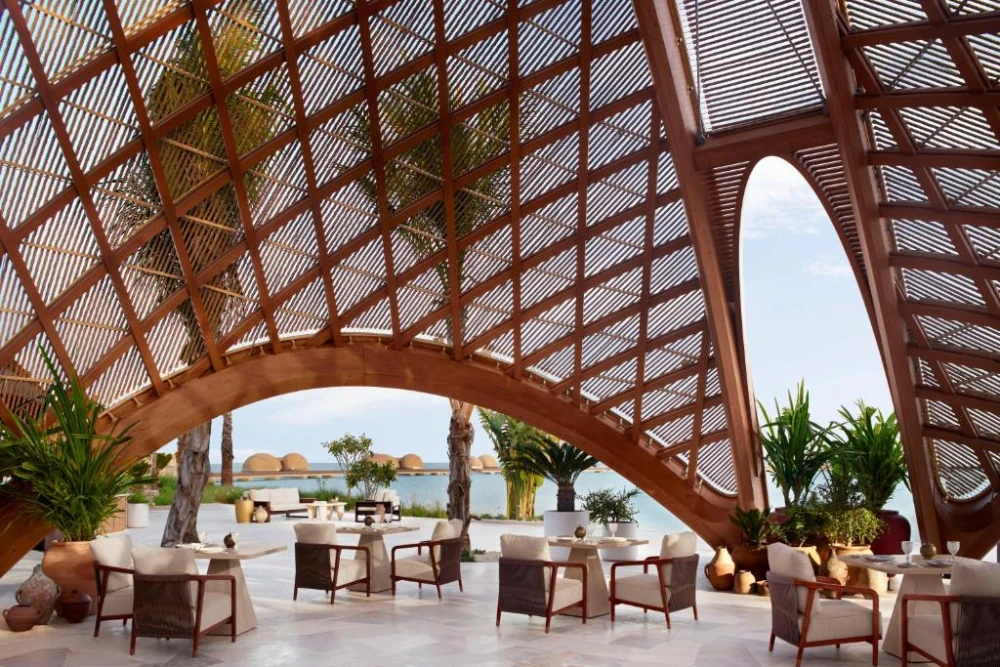
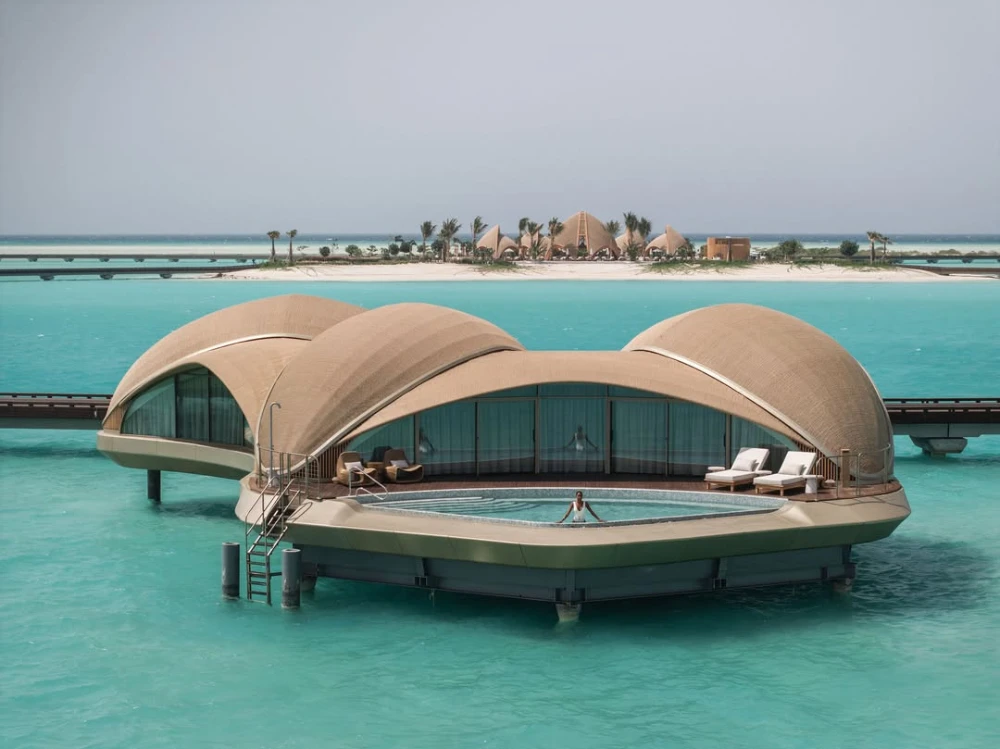
Nujuma sits on the Ummahat Islands, 26 kilometers offshore and reachable only by chartered boat or seaplane, within the world’s fourth-largest barrier reef system. The coral here has existed for five thousand years with almost no boat traffic, no anchors dropped, and no damage done. Developer Red Sea Global has committed to a 30 percent net conservation benefit by 2040, with reef dives contributing active data through the resort’s Conservation House program. Guests are invited to participate directly: 28,000 mangroves are thriving on the island, turtle nests are actively protected, and mangrove planting is offered as a guest experience. Named Forbes Travel Guide’s Hotel of the Year 2024. For travelers who want to be part of a reef conservation story at its very beginning, this is the most compelling entry on the list.
- Location: Ummahat Islands, Red Sea, Saudi Arabia (26km offshore by boat or seaplane)
- Highlights: Fourth-largest barrier reef system in the world; 5,000-year-old reef with minimal human impact; 30% net conservation benefit target by 2040; 28,000 mangroves; turtle nest protection; mangrove planting for guests; Forbes Hotel of the Year 2024
- Perfect for: Luxury travelers who want meaningful conservation access, divers seeking untouched reefs, those interested in the emerging Red Sea destination
7. Turtle Inn (Placencia, Belize)
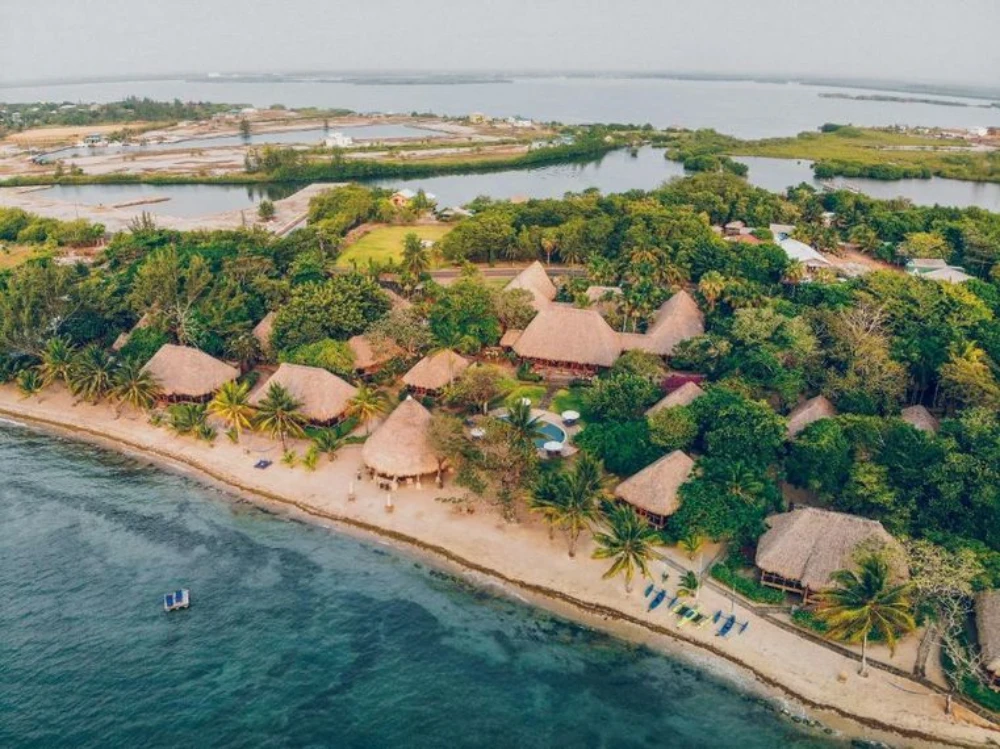
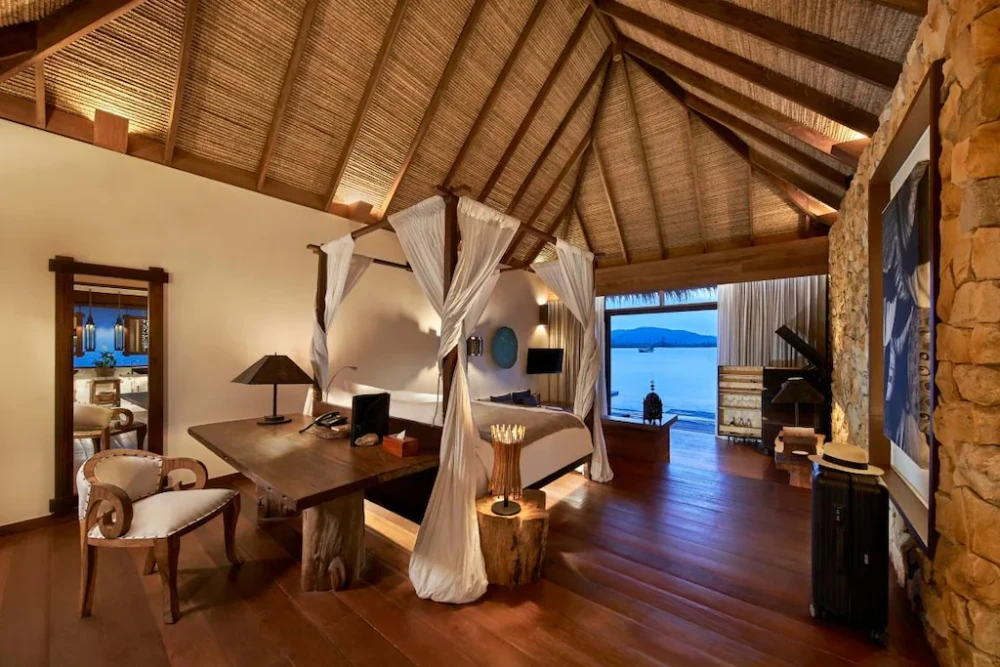
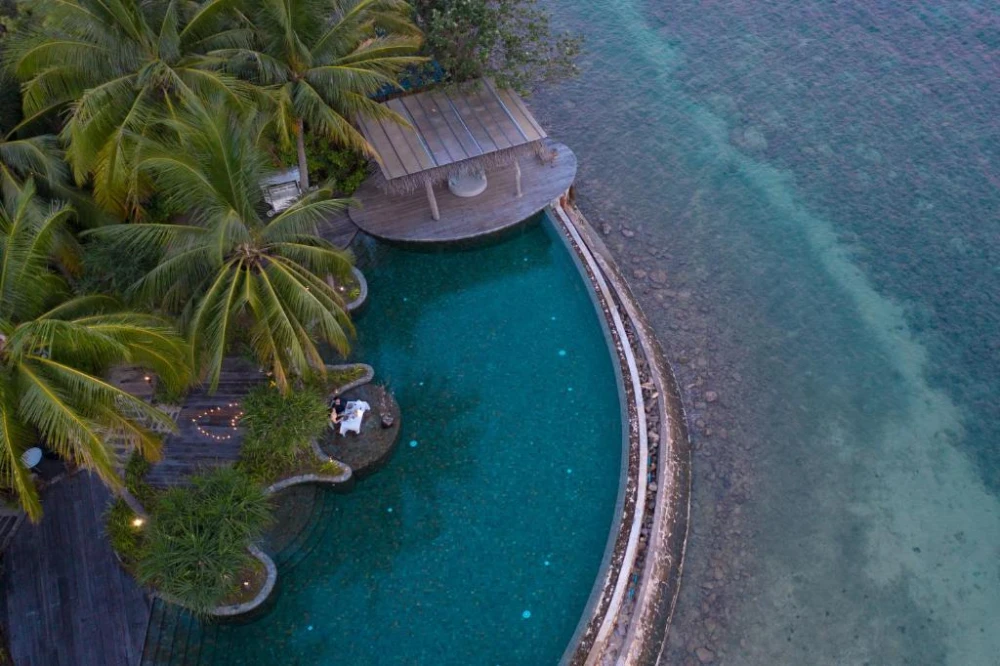
Francis Ford Coppola’s boutique resort on the southern Belizean coast, steps from the Caribbean Sea and the world’s second-largest reef system. Turtle Inn works directly with reef conservation organizations along the Belize Barrier Reef and offers guests monitoring dives covering whale sharks, hawksbill turtles, manatees, and coral formations that remain among the healthiest in the Caribbean. Belize was the first country to ban bottom trawling, and its Marine Protected Area network gives Turtle Inn’s reef access a legal protection most resorts cannot match. The thatched beachfront cottages designed by Coppola are unhurried and personal. The food is sourced locally and cooked with genuine care.
- Location: Placencia Peninsula, Belize (world’s second-largest reef system)
- Highlights: Direct access to the Belize Barrier Reef; monitoring dives for whale sharks, hawksbill turtles, and manatees; Belize Marine Protected Area network protection; locally sourced food; Coppola-designed thatched cottages
- Perfect for: Caribbean reef divers, travelers who want boutique character alongside conservation access, those drawn to the Belizean coast
8. Misool Eco Resort (Raja Ampat, Indonesia)
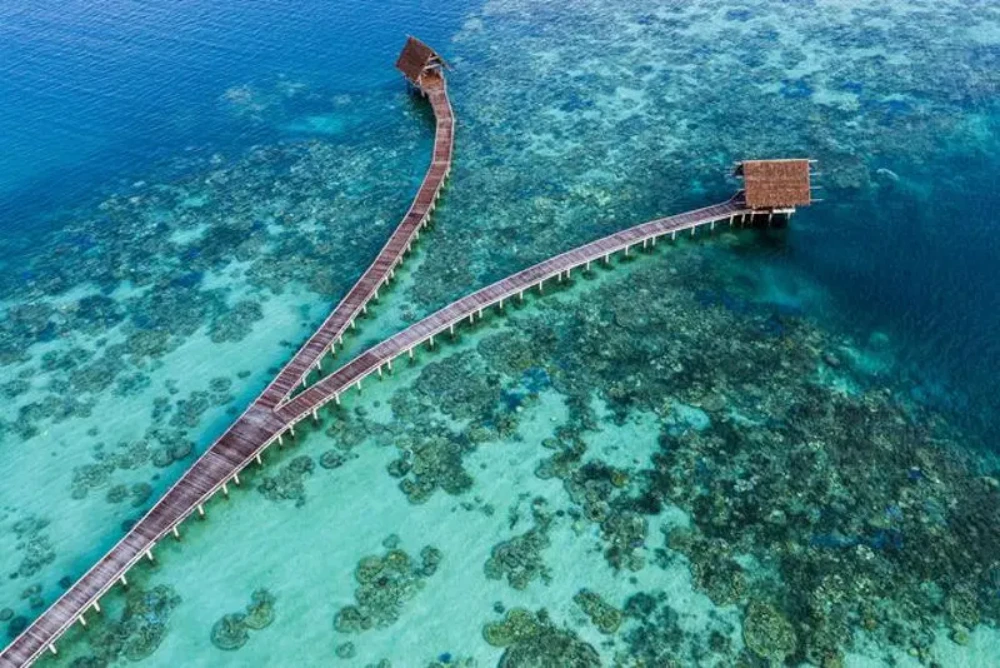
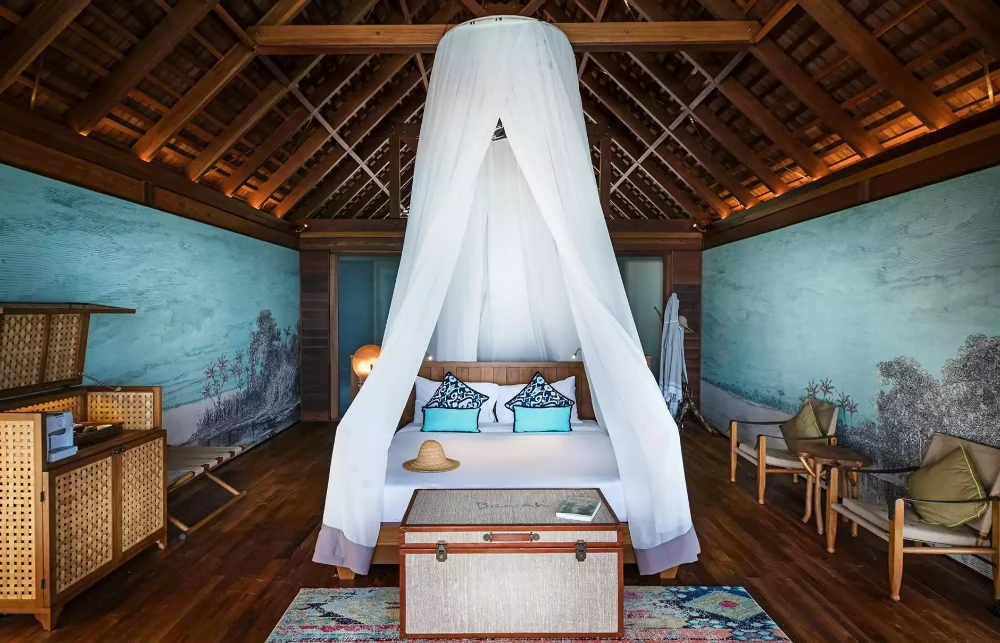
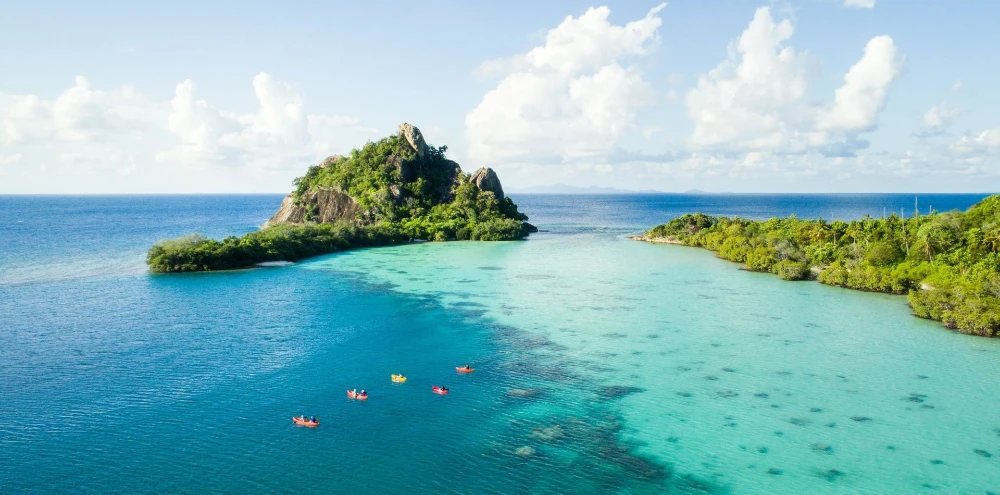
Remote Indonesia, accessible only by seaplane, and one of the most ecologically rigorous resorts on this list. Misool Eco Resort operates across six islands, 13 beaches, three lagoons, and 100 hectares of tropical rainforest in one of Indonesia’s most biodiverse marine environments. Marine conservation is central to its ethos: guests participate in coral reef restoration, reef health monitoring, and underwater clean-up dives, with the surrounding lagoons designated as protected zones where fish, turtles, and rays flourish. On land, a solar farm, electric transport, zero hard plastics, permaculture gardens, coral and turtle nurseries, on-island water sterilization, and locally sourced food complete a sustainability model few resorts anywhere can match.
- Location: Remote Indonesian archipelago (seaplane access only)
- Highlights: 6 islands, 13 beaches, 3 lagoons; protected zone lagoons; coral and turtle nurseries; solar farm and zero hard plastics; permaculture gardens; guest reef restoration and monitoring dives
- Perfect for: Hardcore eco-travelers, divers who want untouched Indonesian reefs, those who want the most complete sustainability model on this list
Which Eco-Resort with Coral Reef Conservation Is Right for You?
For the most scientifically rigorous operations in the Maldives, Six Senses Laamu and Gili Lankanfushi lead the field, with Laamu holding the edge for sheer scale of marine science and Gili for the longest uninterrupted track record. Heron Island offers the deepest longitudinal reef data anywhere in the world thanks to 70-plus years of University of Queensland research. Song Saa is the standout for travelers who want genuine conservation impact in a destination that is still largely undiscovered. Nujuma is the most compelling new entry on the list, with an ancient reef system that has barely been touched and a conservation framework being built from scratch. Turtle Inn is the Caribbean pick. Misool delivers the most complete land-and-sea sustainability model of any property here.
FAQs About Eco-Resorts with Coral Reef Conservation
What to Know Before You Book
– “Eco-resort” is unregulated. Look for third-party certifications like EarthCheck Gold, Ecotourism Australia, or Marine Park Authority compliance. These involve actual audits, not self-reporting.
– Conservation activities are usually bookable extras. Reef planting sessions and monitoring dives are not always automatic inclusions. Confirm what is available before you arrive. Spaces are limited.
– Reef-safe sunscreen is non-negotiable. Common sunscreen ingredients like oxybenzone are toxic to coral. Look for non-nano mineral-based products with zinc oxide or titanium dioxide. The best resorts here provide it, but bring your own to be certain.
– Remote access is by design. Misool, Laamu, and Nujuma are deliberately hard to reach. That is what makes conservation possible. Build the transfer time into your planning.
The reefs these hotels are built around are not guaranteed to exist in 50 years. The resorts on this list know that and have chosen to put conservation at the center rather than treat it as a footnote. Staying here funds reef monitoring, employs marine biologists, establishes no-take zones, and gives coral larvae a fighting chance. It also produces the kind of diving that changes how you see the ocean permanently. Book the conservation dive first. The overwater villa is almost secondary.

Best Travel Tips
Thinking About Working Remotely Abroad?
WhereToNomad compares 47+ digital nomad visas and matches you to the best country based on your income, passport, and priorities. Free quiz, no signup required.
Book Your Flight
Find the cheapest flight by using Skyscanner. For over a decade I've found it to nearly always offer the best deals.
Book Your Accommodation
You can book your hotel or guesthouse with Agoda as it consistently has the best rates.
Always Use Travel Insurance
Travel insurance safeguards you against illness, injury, theft, and cancellations, providing peace of mind if anything goes wrong. My top pick for excellent service and value is SquareMouth (best for all age groups.)
Need Help Finding Activities for Your Trip?
- Economy to Mid-Range
- TripAdvisor
- Go With Guide Mid-Range to Luxury
- TRAFALGAR
Stay Connected While Traveling
Cheapest Way to Transfer Money
I've been using XE for all my international money transfers, and it's been a game changer. The fees are super low, and I get the real exchange rate which saves a lot. The normal fee is usually just a couple dollars per transaction.
Ready to Book Your Trip?
Take a look at my resource page for top travel companies and tips. I've listed all my personal favorites that I've used over years of full-time travel, each best in class, so you can't plan your trip wrong!