Should you rent a car in Italy? Here is the short answer, because that is probably why you clicked: yes, if your trip is built around small towns, the countryside, the mountains, or the coast, and no if you are only visiting big cities like Rome, Florence, Venice, and Milan. For most people the honest answer is “a car for part of the trip, trains for the rest.”
I spent about a month driving through northern and central Italy, roughly 1,500 km, from Lake Como up into the Dolomites, over to Bassano del Grappa, then down through Ferrara, Urbino, and Perugia. Some of those places would have been genuinely miserable without a car. A few of them I could not have reached at all. So this is not a theoretical answer. This is what I learned the expensive way.
Trip planner
Should you rent a car in Italy?
Question 1 of 5
Where are you going?
Pick everything on your list. This is the answer that matters most.
Question 2 of 5
How much are you moving around?
Roughly how many separate places will you stay or stop?
Question 3 of 5
How do you feel about driving?
Most rental cars in Italy are manual. Automatics cost more and sell out.
Question 4 of 5
What is your travel style?
Be honest about how you actually like to travel.
Question 5 of 5
How long is the trip?
Longer trips tend to reach further off the rail lines.
Your verdict
Comparing across companies is how you avoid overpaying. It takes about a minute.
When you should NOT rent a car in Italy
Let me talk you out of it first, because for a big slice of travelers a car is a liability, not a convenience.
Skip the rental if your itinerary looks like Rome, Florence, Venice, Milan, and maybe Naples. Here is why:
- The train network between major cities is excellent. Italy’s high-speed trains (Frecciarossa and Italo) connect the big cities city-center to city-center, often faster than driving and without the parking headache. Milan to Florence is under two hours.
- City centers are closed to cars anyway. Almost every historic center has a ZTL (a restricted traffic zone) that will fine you just for driving in, more on that below.
- Parking in cities is expensive and scarce. You will pay to garage a car you cannot legally drive in the center. You are renting a very costly metal box that sits still.
If that is your trip, take the train, save the money, and stop reading. You do not need a car.
When you absolutely should rent a car in Italy
Now the other side. A car stops being optional the moment your trip includes any of this:
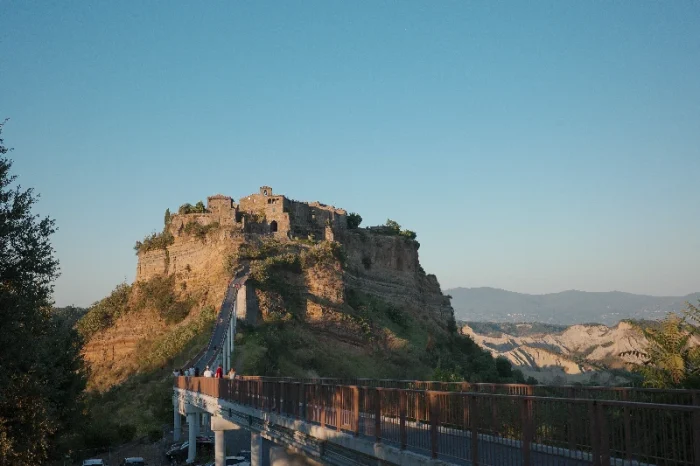
- Small hill towns and villages that trains either skip entirely or reach once a day on an awkward schedule.
- The Dolomites, the lakes, or any mountain or coastal driving where the whole point is stopping wherever the view is good.
- Wine regions, agriturismi, and rural stays that are 20 minutes from the nearest anything.
- A slow, flexible itinerary where you want to leave when you feel like it and detour on a whim.
My route was the second category all the way through. To give you the concrete version:
Urbino has no train station. None. You reach it by bus or by car, and the bus turns a scenic 40-minute drive into a connecting slog. This is a UNESCO town, a Renaissance jewel, and the transit options actively punish you for wanting to go.
Bassano del Grappa is technically on a rail line, but the villages and the Grappa hills around it, which are the actual reason to base there, are not. Without a car you see the town and miss the region.
The Dolomites are the clearest case of all. The valleys are connected by buses that run to their own logic, and the best trailheads, passes, and viewpoints assume you have wheels. Driving the mountain passes is one of the great experiences in Europe. Doing the Dolomites by public transport is possible, but you spend the trip waiting instead of exploring.
If your Italy looks anything like this, the car is not a splurge. It is the thing that makes the trip possible.
How I booked
I compared prices across rental companies instead of going direct to one brand, because the same car from the same lot can differ by a hundred euros depending on which company lists it that week. For a month-long rental, that gap is not small.
Compare prices on DiscoverCarsThe honest region-by-region verdict

Here is where I actually landed on each place, so you can map it to your own plan.
Lake Como. A car helps but is not essential. The ferries across the lake are genuinely good and the lakeside roads are narrow, slow, and clogged in season. If Como is a standalone few days, the ferries cover you. If it is one stop on a longer road trip, keep the car but plan to leave it parked and take boats on the lake itself.
The Dolomites. Rent the car, no debate. This is the region that justifies the whole rental on its own.
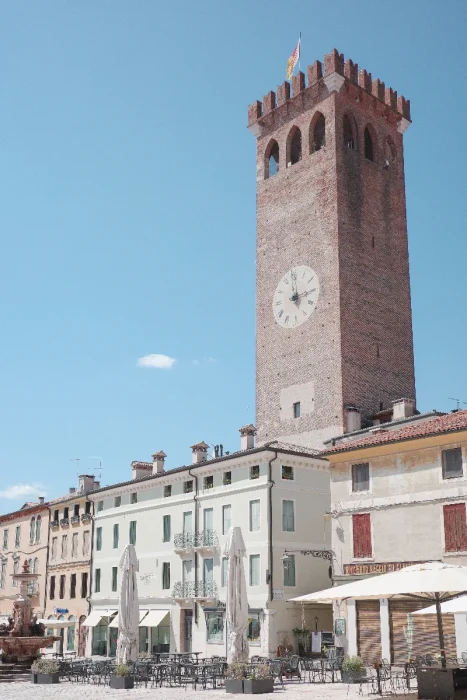
Bassano del Grappa and the Veneto foothills. Car strongly recommended. The town alone is train-reachable, the region is not.
Ferrara. Honestly, you barely need a car here. Ferrara is one of the great cycling cities in Italy, flat and walkable, and it sits on the main rail line. If Ferrara were a solo trip, I would take the train. It earned its spot on my route because I was already driving through.
Urbino. Car essential. See above. The transit situation makes this a place people skip precisely because it is hard to reach, which is also why it is not overrun.
Perugia and Umbria. Car strongly recommended. Perugia itself is reachable by train, but Umbria is a region of hill towns (Assisi, Spello, Montefalco, Gubbio) strung across the countryside, and that is the entire appeal. Landlocked, green, and built for a car.
The pattern is simple: the cities and the flat, on-the-rail-line towns work fine without a car. The mountains, the hills, and the countryside do not. Nearly every place worth the detour on my trip fell on the car side of that line.
The stuff people are actually nervous about
When people ask “should you rent a car in Italy,” what they usually mean is “will driving in Italy be a nightmare.” Here is the real picture, minus the scaremongering.
ZTL zones (this is the one that matters)
ZTL stands for Zona a Traffico Limitato, a limited traffic zone. Most historic town centers have one. Cameras read your plate, and if you drive in without a permit you get a fine that arrives, by mail, months later, often after you have flown home and forgotten the whole thing. Rental companies pass these fines straight to you plus an admin fee.
The good news: ZTLs are avoidable once you know they exist. Park outside the center in a designated lot (follow the blue “P” signs) and walk in. Your hotel can usually register your plate temporarily if you genuinely need to reach it inside the zone. The single most useful habit is: when you see a ZTL sign with a red circle, do not drive past it. That is the whole trick. Most first-timers get fined simply because nobody told them the sign meant anything.
Driving culture
Italian driving has a reputation that is louder than the reality. City driving, especially in the south and in Naples, is genuinely assertive. But the open roads, the autostrada, and the countryside are calm and well maintained. On the highway, stay right unless overtaking, because the left lane is for passing and people will be moving fast. Outside the cities I never found it stressful, and the mountain roads in the Dolomites are a pleasure to drive rather than a trial.
The autostrada and tolls
Italy’s toll highways are excellent and you pay by distance. Take a ticket when you enter, pay when you exit (card works fine). Budget for it on longer legs. It is money well spent for the time it saves.
License and paperwork
If you hold a non-EU license (US, UK post-Brexit for longer stays, and others), Italy technically requires an International Driving Permit alongside your home license. It is cheap and easy to get before you leave, and rental desks and police can ask for it. Do not skip this. It is the kind of thing that is a non-issue until suddenly it is a very expensive issue.
Manual vs automatic
Most rental cars in Italy are manual. Automatics exist but cost more and sell out, so book early if you need one. If you can drive stick, you will have more choice and pay less.
What it actually cost me
People are shy about numbers, so here is the honest breakdown for context. A month is a long rental, which brings the daily rate down compared to a short trip, but the total is still real money.
The base rental for a month ran the largest single line, and the price swung a lot depending on which company was listing the car, which is exactly why comparing across companies mattered. On top of the base rate, budget for:
- Fuel, which is not cheap in Italy, so factor it by distance.
- Tolls on the autostrada for longer legs.
- Parking, mostly in and around towns.
- Insurance, which is where rental costs quietly balloon, more below.
The comparison step is where the savings live. I booked through DiscoverCars specifically because it lines up the same categories across different rental companies, and on a month-long booking the spread between the cheapest and most expensive listing for an equivalent car was large enough to pay for several nights of hotels.
One warning on insurance. The cheap headline rate is not the real price. The counter will push expensive add-on coverage, and declining everything leaves you exposed to a huge excess. The middle path most experienced renters take is booking a car with full coverage included through the comparison site, or buying a standalone excess policy separately, both of which cost far less than the coverage sold at the desk. Sort this out before you arrive, not while a tired agent is upselling you at pickup.
So, should you rent a car in Italy? The bottom line
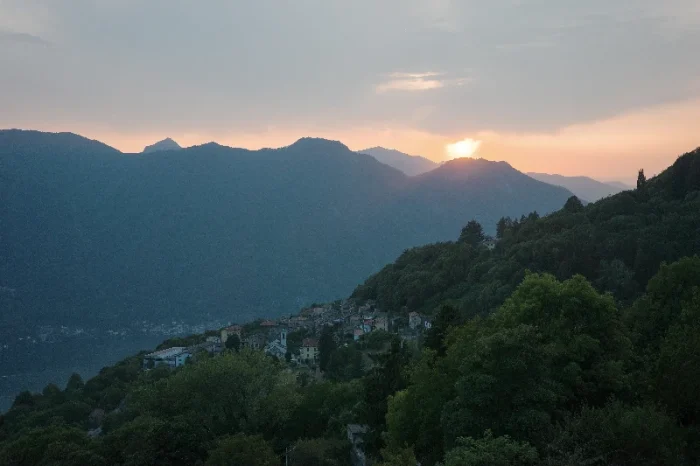
Run your itinerary through one question: is the good stuff in the cities, or between them?
- In the cities (Rome, Florence, Venice, Milan): take trains, skip the car, spend the savings on food.
- Between them (Dolomites, lakes, hill towns, wine country, the coast, anywhere ending in “-o” that trains ignore): rent the car. It is the difference between seeing Italy and seeing four Italian train stations.
- A mix of both: do what I did. Train between the big cities, then pick up a car for the countryside stretch and drop it before the next city.
For my route, from the Dolomites to Urbino to Umbria, the car was never really optional. Half those places exist on the map but not on the timetable. If your trip looks like that, the only real question is where to book, and my advice is to compare across companies rather than walking up to one desk. I used DiscoverCars to do exactly that, and on a rental this long the comparison paid for itself many times over.
Ready to price it up?
If your route runs through the countryside like mine did, the only real question is where to book. Compare across companies before you commit and see the real total in about a minute.
See rental prices on DiscoverCarsFrequently asked questions
Should you rent a car in Italy? In short, yes if your trip is built around the countryside, the mountains, the lakes, or the coast, and no if you are only visiting the big cities. Most travelers end up renting for the rural stretch and taking trains between the major cities.
Is renting a car in Italy worth it? For trips built around small towns, mountains, lakes, or the countryside, yes, clearly. For city-only trips it is not worth the cost and hassle, because trains are faster and city centers are closed to cars anyway.
Do you need a car to visit the Dolomites? Practically, yes. Buses connect the main valleys but run on limited schedules, and the best passes, trailheads, and viewpoints assume you are driving. A car is what makes the Dolomites worth the trip.
Can you visit Tuscany or Umbria without a car? You can reach the main hub towns by train, but the hill towns that are the real reason to go are scattered across the countryside and poorly served by transit. For those regions a car transforms the trip.
What is a ZTL and how do I avoid the fines? A ZTL is a limited traffic zone in a town center, monitored by cameras. Do not drive past a ZTL sign. Park in a signed lot outside the center and walk in. Fines arrive by mail months later, so the cost of ignoring the signs is easy to underestimate.
Do I need an International Driving Permit to drive in Italy? If your license is non-EU, yes, Italy requires an International Driving Permit alongside your home license. Get one before you travel. It is cheap and occasionally checked.
Is driving in Italy difficult for tourists? City driving can be assertive, but highways and countryside roads are calm and well maintained. Avoid driving in historic centers, watch for ZTL zones, and you will be fine.