Last updated on August 23rd, 2026
Cherry blossom season in Tokyo is one of those rare travel experiences where timing isn’t just important – it’s everything. Miss the window by a week, and the petals are already on the ground. Arrive too early, and the branches are still bare with nothing more than a faint promise of pink. For 2026, the Japan Meteorological Agency has released its preliminary forecast, and the news is worth paying attention to: a warmer-than-average spring means sakura will likely bloom earlier than usual.
Here’s what that means in practical terms – and how to plan a trip around it without relying on luck.
2026 Cherry Blossom Timeline for Tokyo
Based on current forecasts from the Japan Meteorological Agency, this is the expected progression of cherry blossom stages in central Tokyo:
- March 15 – 20 – First buds begin to open. Trees show early signs of color, but full bloom is still days away. This stage is called kaika (開花), or “first bloom.”
- March 20 – 26 – Early flowering. Roughly 30 – 50% of blossoms are open. The city starts to shift – parks get busier, and the first hanami picnic blankets appear on the grass.
- March 31 – April 3 – Full bloom, known as mankai. This is the peak. Every branch is loaded with flowers, and the visual impact is staggering. If the goal is to see Tokyo draped in pink and white, this is the window.
- April 4 – 10 – Late stage. Petals begin to fall in what the Japanese call sakura fubuki – literally “cherry blossom blizzard.” It’s arguably just as beautiful as full bloom, with rivers of petals floating through the air and collecting on paths and waterways.
- After April 10 – Most trees will have shed their blossoms. Green leaves take over rapidly.
These dates can shift by 3 – 5 days depending on actual weather conditions closer to the season. A sudden warm spell in early March could push everything forward; an unexpected cold snap could delay it.
How Long Does the Bloom Actually Last?
This is the part that catches many visitors off guard. The entire bloom cycle at any single location lasts roughly 7 to 10 days – from first open blossom to the last petal falling. That’s it. The full bloom stage, the one everyone wants to photograph, holds for maybe 3 to 5 days at best.
That said, not every tree and every park hits peak at the exact same moment. Trees in sunnier, more urban spots tend to bloom a few days ahead of those in shadier or elevated areas. This natural variation works in a traveler’s favor. Even arriving a day or two after peak in one neighborhood, there’s often full bloom happening just a short train ride away.
First buds: March 15 – 20
Early flowering: March 20 – 26
Peak bloom (mankai): March 31 – April 3
Petal fall (sakura fubuki): April 4 – 10
End of season: after April 10
Dates may shift ±3 – 5 days depending on weather. Source: Japan Meteorological Agency preliminary forecast.
Where to See Cherry Blossoms in Tokyo
Tokyo has hundreds of sakura viewing spots, but a few stand out for sheer density of trees, atmosphere, and accessibility.
Ueno Park
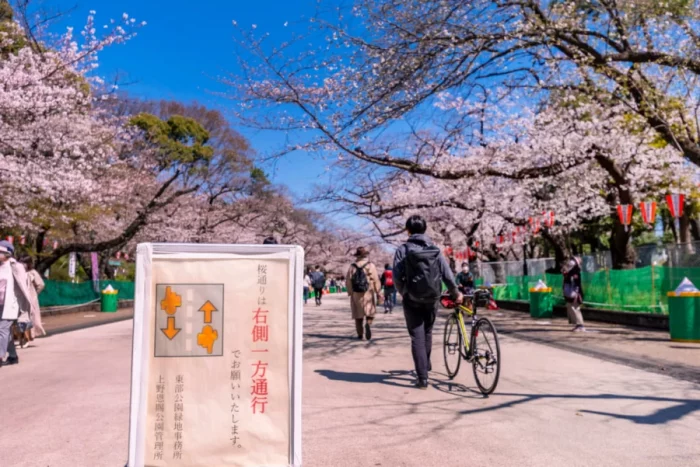
With over 1,000 cherry trees lining its main paths and surrounding Shinobazu Pond, Ueno is one of the most iconic hanami locations in the city. It gets extremely crowded during peak bloom, especially on weekends. Weekday mornings offer a noticeably calmer experience – and better photo opportunities.
Shinjuku Gyoen National Garden
A different vibe entirely. The garden is more curated, quieter, and home to multiple cherry tree varieties that bloom at slightly different times. That means the viewing window here stretches a bit longer than at other parks. Worth noting: alcohol is not permitted inside, so the atmosphere is more contemplative than festive.
Meguro River
The canal banks lined with cherry trees create one of the most photographed sakura scenes in Tokyo. During bloom, the branches arch over the water, and at night, temporary lighting turns the whole stretch into something surreal. It’s spectacular – and packed. Going early in the morning or on a weekday makes a real difference.
Chidorigafuchi
The moat near the Imperial Palace offers rowboat rentals during sakura season. Paddling under a canopy of blossoms while looking up at the palace walls is a genuinely unique perspective. Expect long queues for boats on weekends – sometimes exceeding an hour.
A few less-known alternatives worth considering:
- Koganei Park in western Tokyo – spacious, green, and far less crowded than central spots
- Asukayama Park in Kita ward – one of Tokyo’s oldest hanami locations, dating back to the Edo period
- Sumida Park along the Sumida River – combines sakura viewing with a backdrop of Tokyo Skytree
The Urban Heat Island Advantage
Here’s something not enough travel guides mention: Tokyo’s central districts act as a heat island. Concrete, density, and the sheer activity of the city core retain warmth, which means parks in areas like Chiyoda, Shinjuku, and Minato tend to see their trees bloom 2 to 3 days earlier than parks in outer wards or suburban areas like Tama or Machida.
This is actually a strategic advantage for anyone spending several days in the city. It’s possible to start the week seeing peak bloom in central Tokyo, then move outward to catch trees still in full flower as the days go on. Planning multiple viewing spots across different zones maximizes the chances of hitting that perfect mankai moment – even if the forecast shifts slightly.
Planning the Trip: Practical Considerations
Sakura season is peak travel time in Tokyo, and that affects everything from hotel prices to train congestion. A few things worth keeping in mind:
Accommodation. Book at least 2 – 3 months in advance. Hotels near major parks like Ueno and Shinjuku fill up fast, and prices can double compared to regular spring rates. Staying one or two stations away from the most popular spots often saves a significant amount without adding much travel time.
Flights. Late March and early April are among the most expensive weeks of the year for flights to Tokyo. Even shifting travel dates by a couple of days can make a noticeable difference in airfare. Midweek departures tend to be cheaper than Friday or Sunday flights.
Food and picnics. Convenience stores and department food halls – called depachika – sell ready-made bento boxes and seasonal sakura-themed snacks that are perfect for hanami. There’s no need to fight for restaurant seats near the parks, where waits can stretch past an hour during peak weekends.
Getting around. The JR Yamanote Line connects many of the best sakura spots. A Suica or Pasmo IC card makes hopping between parks completely seamless. Cycling is another surprisingly good option for covering Meguro River and Chidorigafuchi in one afternoon.
Weather. Daytime temperatures in late March and early April average 12 – 18°C (54 – 64°F) but drop noticeably after sunset. Layering is essential, especially for evening viewing sessions.
Sasaki Hanshiro, a local guide from the Excurzilla tourism bureau, recommends targeting March 25 through April 5 as the optimal travel window for Guided sakura tours in 2026. According to him, this range covers early bloom through the first days of petal fall, giving visitors the best statistical chance of experiencing full bloom regardless of minor forecast shifts.
Night Viewing: Yozakura
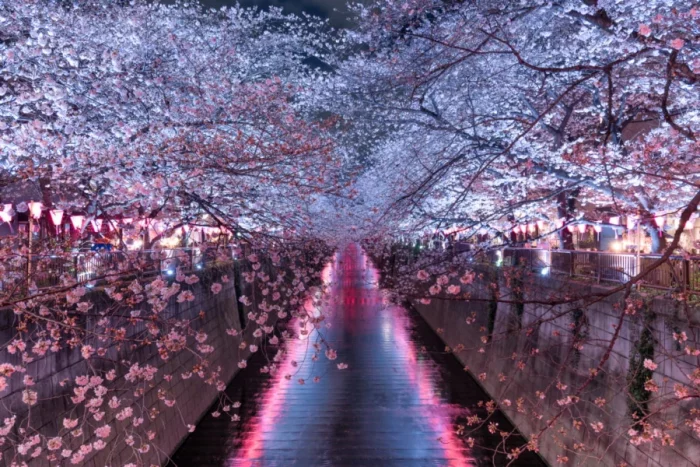
Daytime hanami gets most of the attention, but nighttime cherry blossom viewing – known as yozakura – is an experience of its own. Several parks and riversides set up temporary lanterns and spotlights that illuminate the blossoms against the dark sky, transforming familiar daytime spots into something entirely different.
Meguro River and Chidorigafuchi are particularly striking after dark. Ueno Park also sets up evening lighting, though the crowds can be intense on weekends. For something quieter, Rikugien Garden in Bunkyo ward hosts a limited-entry yozakura event with dramatically lit weeping cherry trees. Tickets tend to sell out quickly, so checking availability early is worthwhile.
The contrast between a daytime visit – all blue sky and pink petals – and an evening return to the same spot under warm lantern light is genuinely surprising. They feel like entirely different places, and experiencing both within the same day is one of the more memorable things sakura season offers.