Last updated on July 5th, 2026
Back in 2011, right after graduating from Michigan State University, I booked a one-way ticket to Japan with a plan to teach English. That plan fell apart before I even landed. Somehow, I found myself exchanging my English-speaking skills at a hostel in Osaka for free accommodation, and that was the beginning of one of the greatest food journeys of my life. If you are looking for the Japanese foods you must try, you have come to the right place.
Since that first trip, I have lived in Japan for at least two years total and visited the country a dozen times or so. Tokyo, Osaka, Kyoto, Fukuoka, Okinawa… I have covered a lot of ground. And through all of it, the food has never disappointed. What makes Japan so special is how they take something simple and perfect it to an almost insane level. A skewer of grilled chicken becomes a near-religious experience. A bowl of noodles becomes a work of art. You really have to see it to believe it. Planning your first trip? Check out some of these Japan tour packages to get started.
Without further ado, here are the 10 Japanese foods you must try.
Table of Contents
Japanese Ramen (ラーメン)
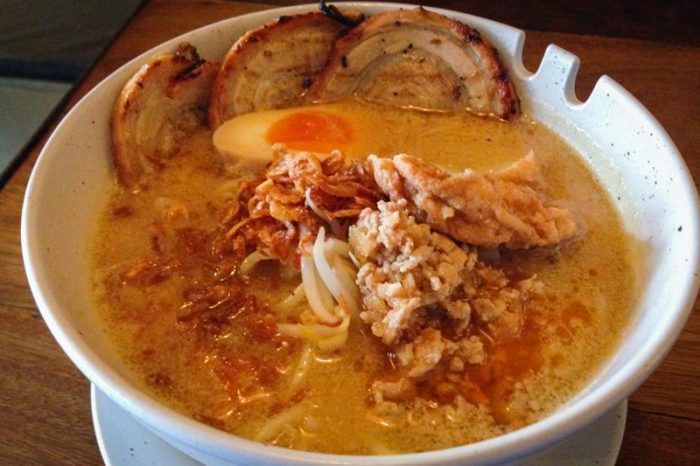
I have tried ramen all across Asia and I keep coming back to Japan. I have compared probably hundreds of shops in Tokyo alone and the thing that surprises most people is just how different each bowl can be. Ramen in Japan is not one dish. It is an entire universe of dishes.
The four main regional styles are worth knowing before you visit. Tonkotsu from Fukuoka is a creamy, rich pork bone broth that is incredibly filling. Shoyu is a soy sauce based broth, typically lighter and more common in Tokyo. Miso ramen originated in Hokkaido and has a deeper, earthier flavor. Shio is a clear salt-based broth, the lightest of the four and often used to showcase really high quality noodles and toppings. Then there is Tsukemen, where you dip cold noodles into a thick concentrated broth on the side. That one will change your life.
My best advice is to find out what style you personally prefer and then hunt down the best shop in that style. For Tokyo specifically, I have a full Tokyo weekend guide that covers where to eat. Ramen alone makes Japan worth visiting.
Interactive
Find Your Ramen Style
Answer three questions and I’ll tell you which style to order first.
1. What kind of broth sounds most appealing to you?
Yakitori (焼き鳥)
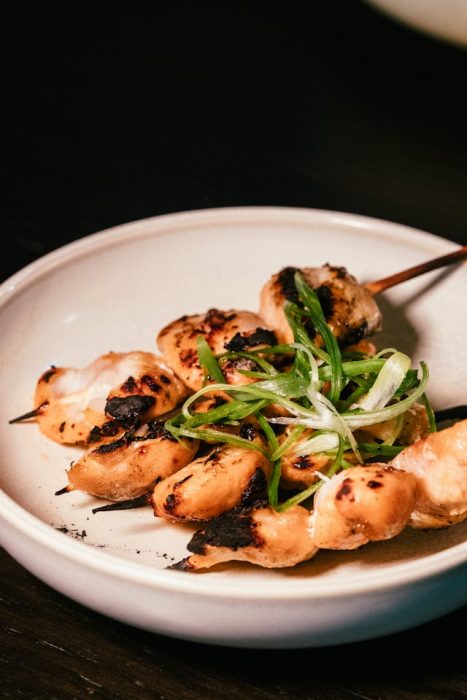
Yakitori is the perfect example of everything that makes Japanese foods you must try so special. It is literally just grilled chicken on a skewer. In most countries, that is a very ordinary thing. In Japan, it becomes extraordinary.
A dedicated yakitori chef will spend years perfecting the char, the glaze, the timing and the cut. Different parts of the chicken are skewered separately: thigh, breast, skin, liver, heart, cartilage. Each one gets different treatment. The most popular is negima, alternating pieces of chicken thigh with spring onion, basted in a sweet soy tare sauce. Tsukune is a minced chicken meatball, often finished with a raw egg yolk for dipping.
The best yakitori spots are tiny, smoky, counter-seat-only places tucked under train tracks in Tokyo. They are incredibly affordable and often come with cold Japanese beer. This is the kind of meal that turns into a two-hour evening without you noticing.
Must READ: 11 Amazing Korean Foods You Must Try
Sashimi (刺身)
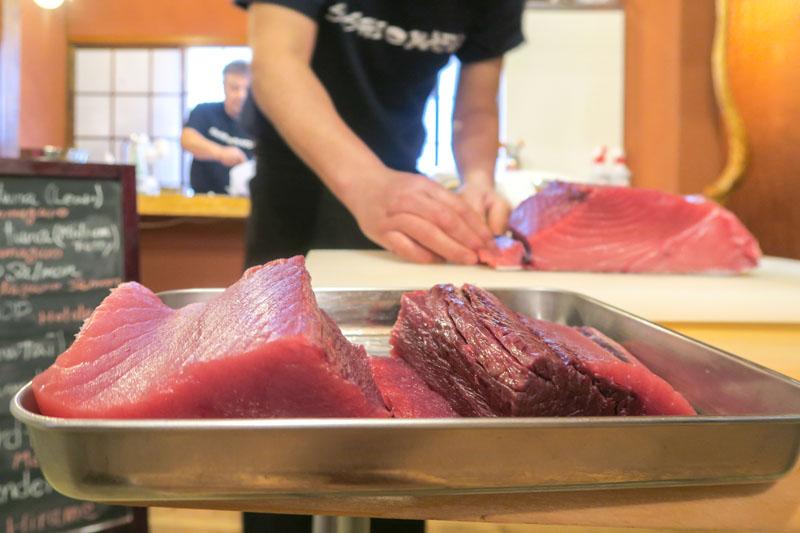
Sashimi is raw fish sliced and served without rice. Simple in concept, extraordinary in execution. Japan’s access to incredibly fresh seafood and the precision of Japanese knife work means sashimi here is on a completely different level to what you find elsewhere.
My personal favorite is otoro, which is the fatty belly of bluefin tuna. It is buttery, rich and almost dissolves the moment it hits your tongue. It is also expensive, which makes it all the more satisfying when you finally get it. Salmon sashimi is a close second and more accessible price-wise. Both are among the Japanese foods you must try at least once, ideally at a proper fish market or sushi counter where the fish came in that morning.
Tsukiji Outer Market in Tokyo and Nishiki Market in Kyoto are great starting points. Ask for the omakase (chef’s choice) option at a sushi counter and let them decide what is best that day.
A5 Wagyu (A5和牛)

I need to address something upfront. Australian wagyu is not the same as Japanese A5 wagyu. I know that sounds harsh if you have paid good money for wagyu outside of Japan, but it is just the truth. The marbling, the fat content, the tenderness and the flavour of genuine A5 wagyu beef from Japan is in a completely different category.
The best way to try it for the first time is at a teppanyaki restaurant, where the chef cooks right in front of you on a large iron griddle. Watching a skilled teppanyaki chef work with A5 wagyu is part of the experience. The fat renders at a lower temperature than regular beef, so it requires less time on the heat. What you end up with is something so rich that a few small slices is genuinely enough.
Kobe beef and Matsusaka beef are the two most famous regional varieties. Both are worth seeking out if your budget allows. A small tasting portion at a teppanyaki counter is not as expensive as you might think and is absolutely one of the Japanese foods you must try before you leave the country.
Pork Tonkatsu (豚カツ)
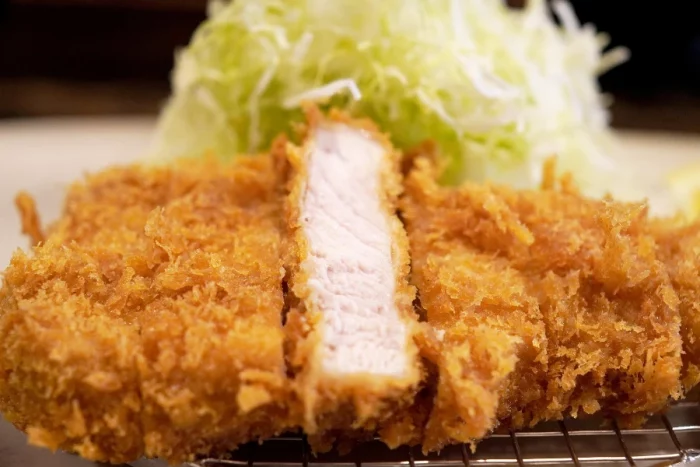
A breaded and deep-fried pork cutlet. That description makes it sound so ordinary. It is not ordinary at all. Japan has restaurants that do nothing but tonkatsu and have been doing it for decades. That level of focus and dedication produces results.
The key is the pork. Japanese tonkatsu uses thick cuts of high-quality pork loin or fillet, lightly coated in panko breadcrumbs and fried until perfectly golden. The crunch is unlike anything else. It is served with shredded cabbage, tonkatsu sauce and a bowl of rice and miso soup. A complete, deeply satisfying meal for very little money.
The combination of tonkatsu and Japanese curry (more on that below) is one of my all-time favorite pairings anywhere in the world. Many restaurants serve both together as katsu curry and it is simply brilliant. This is comfort food at its absolute best.
Japanese Curry (カレー)
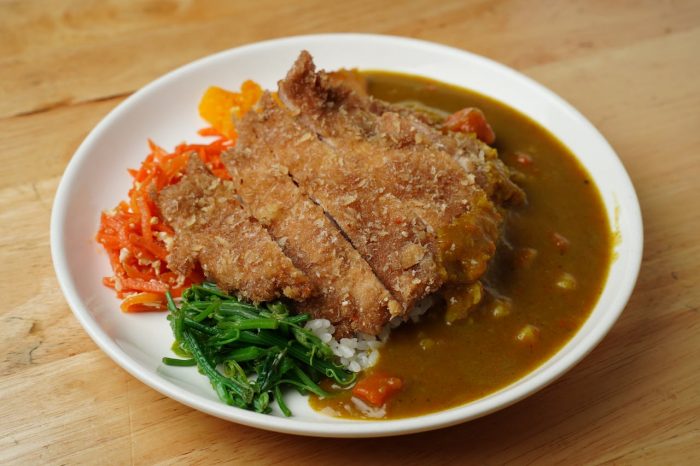
Japanese curry has an interesting history. It was introduced to Japan in the late 1800s via the British, who had picked it up from India during the colonial era. Japan then did what Japan always does and made it their own. The result is something noticeably different from Indian or Thai curry. It is thicker, slightly sweet, milder and deeply comforting.
Japanese curry is almost always served over rice and often comes with a fried protein on top. The most popular combination is katsu curry, which is the tonkatsu I mentioned above served over curry rice. You will find Japanese curry everywhere from tiny local diners to dedicated curry chains.
If you prefer to try it at home first, Japanese curry roux blocks are sold in supermarkets worldwide and are genuinely delicious. It is one of the easiest things to make from scratch and a great gateway into Japanese foods you must try.
Tempura (天ぷら)

Tempura is another dish that looks deceptively simple. Light batter, hot oil, a few prawns and vegetables. But in Japan, tempura becomes an art form. The batter has to be ice cold, mixed minimally to avoid developing gluten, and fried at a precise temperature to achieve that signature airy, paper-thin crunch.
Practically anything can be tempura’d. Prawns are the classic. Shiso leaf, sweet potato, pumpkin, mushroom, green bean and even ice cream all work beautifully. At high-end restaurants, tempura is often featured in omakase menus, where the chef selects seasonal ingredients and fries each piece individually right in front of you. This is one of those meals where the process is as enjoyable as the food itself.
For a more casual version, tempura served over a bowl of soba noodles in dashi broth (tempura soba) is one of the great cheap eats of Japan. Available at standing noodle bars for a few dollars and absolutely delicious.
Must READ: 10 Incredible Thai Street Foods You Must Try in Bangkok + Spice Calculator
Okonomiyaki (お好み焼き)
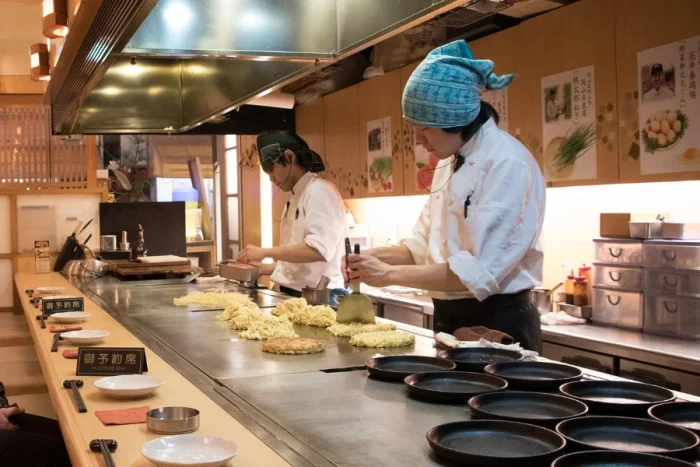
I still remember the first time I tried okonomiyaki. I was in Osaka, still figuring out the city on what was essentially no budget during my hostel days. A local pointed me toward a tiny restaurant where they cooked it right on the griddle in front of you. One bite and my mind was completely blown.
Okonomiyaki translates loosely to “cook what you like.” It is a thick, savory pancake made with a flour and egg batter mixed with shredded cabbage and your choice of fillings. Pork belly, shrimp, squid, cheese, mochi, you name it. It gets topped with okonomiyaki sauce (similar to Worcestershire), Japanese mayonnaise, bonito flakes and aonori (green seaweed flakes). The bonito flakes wave in the heat of the freshly cooked pancake and it looks incredible.
Osaka style and Hiroshima style are the two main varieties. Osaka style mixes everything together. Hiroshima style layers the ingredients, including noodles, and is built up in stages. Both are brilliant. This is one of the Japanese foods you must try in its home city if at all possible.
Japanese Matcha (抹茶)

I have had the privilege of visiting high-end Japanese matcha producers on food tours in Japan and what I can tell you is that the matcha you find abroad is simply not the same. The color, the aroma, the depth of flavor from freshly ground ceremonial grade matcha in Japan is on another level entirely.
Uji in Kyoto is considered the heartland of Japanese matcha production and visiting there is one of the great food experiences I have had anywhere in the world. I have written about my matcha experiences in Japan in detail if you want to go deeper, and I have also reviewed a matcha and green tea tour in Kyoto that I genuinely recommend to anyone visiting the region.
Beyond the tea itself, everything matcha-flavored in Japan is delicious. Matcha ice cream, matcha mochi, matcha Kit Kats, matcha cheesecake. Japan has turned matcha into an entire flavor category and every single version is worth trying. This is one area where I would tell you to eat and drink as much as you possibly can while you are there.
Mochi (餅)

Mochi is glutinous rice cake and it has a wonderfully chewy, bouncy texture that is completely unlike anything in Western cuisine. It comes in many forms. Fresh mochi filled with sweet red bean paste is the traditional version. Mochi ice cream, where ice cream is wrapped in a thin layer of mochi, has become popular worldwide and for good reason.
Here is something a little unexpected that I learned from a Japanese friend while living in Tokyo. You can buy mochi ice cream from the convenience store or supermarket, make a simple tempura batter, dip the frozen mochi in it and deep fry it. The outside becomes crispy while the ice cream inside stays cold. It is an incredible contrast of textures and temperatures and costs almost nothing to make at home. It has become one of my favorite things to make.
Traditional mochi making, called mochitsuki, involves pounding steamed glutinous rice in a large wooden mortar. If you get the chance to see this done at a festival or market in Japan, it is worth watching. The skill and speed involved is impressive.
You Don’t Have to Be in Japan to Find Amazing Japanese Food
Japan is obviously the best place to try these Japanese foods you must try. But the good news is you do not necessarily need to book a flight to get started. Several countries in East Asia have incredibly high-quality Japanese food scenes that rival what you find in Japan itself.
Taiwan has one of the best Japanese food scenes outside of Japan. The historical ties between the two countries mean that Japanese food culture is deeply embedded there. You will find excellent ramen, sushi and tonkatsu across Taipei.
Thailand is another excellent option and this is one I can speak to personally after spending a lot of time living in Bangkok. The Japanese expat community there has brought over genuinely authentic restaurants. The ramen and sushi scene in Bangkok are both impressive.
Vietnam, especially Ho Chi Minh City and Hanoi, has a growing number of outstanding Japanese restaurants driven by a large Japanese business community. Worth exploring if you are already in the region.
That said, if you can get yourself to Japan, do it. Nothing compares to having these dishes in their home country. I have reviewed JAL business class on the Bangkok to Tokyo route and JAL business class on the Tokyo to Chicago route if you want to arrive in style.
Summary

Japan has been one of the most formative food destinations of my life. From that first bowl of ramen I slurped down in a tiny Osaka shop in 2011 to A5 wagyu at a teppanyaki counter in Tokyo years later, the Japanese foods you must try just keep delivering. What makes it all so special is the dedication. Japan has a word for it, shokunin, which roughly translates to the spirit of a craftsman. You feel that in every single dish on this list.
Get out there and try all of these. And when you are ready to plan the trip, these Japan tour packages are a great place to start.
Disclosure: This post might contain affiliate links. If you book hotels, tours, or make purchases through these links, I may earn a small commission at no additional cost to you. I only recommend services I genuinely believe in. Thank you for your support!
BEST TRAVEL RESOURCES
Here are my go-to companies when planning my travels. They’re my first stop for flights, accommodations, tours, and staying connected!
- FreeCalorieTracker - FreeCalorieTracker is a free, no-frills tool for logging meals and tracking your daily calorie intake without needing to sign up or pay for a subscription. I use it when I want to stay on top of my eating habits while traveling, especially when trying unfamiliar foods. Simple, fast, and genuinely useful for staying mindful on the road.
- WhereToNomad - WhereToNomad is a free tool that compares 47+ digital nomad visas side by side and matches you to the best destination based on your income, passport, and lifestyle priorities. I built this after spending hours researching visa requirements across dozens of countries. Take the 5-question quiz and get personalized results with cost of living, tax treatment, and visa details in under 2 minutes.
- Skyscanner - Skyscanner is my favorite flight search engine of all time for consistently finding the best deals. It searches smaller booking sites that others often miss. This is where I end up time and time again after first deciding where I want to go in Google Flights.
- Trip.com - Trip.com is another quality travel booking engine that I use often for flights and hotels. Sometimes they have options that aren’t listed in other sites. I don’t start with it but use it just before I pay for my flight tickets to confirm that I am getting the best prices.
- Booking.com - Booking.com offers one of the largest selections of budget accommodations worldwide. It consistently finds the lowest prices and I also appreciate its user-friendly interface and the option to book without upfront payment.
- Agoda - This website is the go-to for finding hotels across Asia, offering the most extensive inventory and the best rates. Whenever I travel in Asia, it’s the only accommodation site I use, it’s the best out there.
- SquareMouth - SquareMouth is a leading online marketplace for travel insurance, offering a wide range of policies from top-rated providers.
- XE - I’ve been using XE for all my international money transfers, and it’s been a game changer. The fees are transparent, and I get the real exchange rate, which saves me so much compared to other services.
- GoWithGuide - GoWithGuide is a platform for booking guided tours, cooking classes and outdoor adventures. The rates tend to be competitive and another way to experience a place without breaking the bank.
- TRAFALGAR - Trafalgar offers higher-end guided tours that tend to be longer in length and take travelers deep into the heart of each destination. Their tours are designed for travelers who want stress-free, immersive travel, with everything from accommodations to transportation taken care of.
- NordVPN - NordVPN provides online security and privacy while you travel worldwide. There are many VPNs out there but NordVPN is one of the best. Ideal for travelers and remote workers alike.
- GlobalYo - GlobalYo connects travelers with a robust selection of eSIM options for hassle-free mobile data worldwide. I’ve bought several eSims from them and they’re always affordable and connect me wherever I am.